Chimney repair · Seattle

Chimney repair in Seattle

Worried a small crack means the whole chimney has to come down — most of the time it does not.

No obligation. Someone answers every day, 7 a.m. to 9 p.m.

  • A written scope and photos before any repair work begins.
  • Repairs matched to what actually failed — crown, mortar, flashing or liner.
  • A written scope for straightforward jobs; longer for anything needing engineering input.
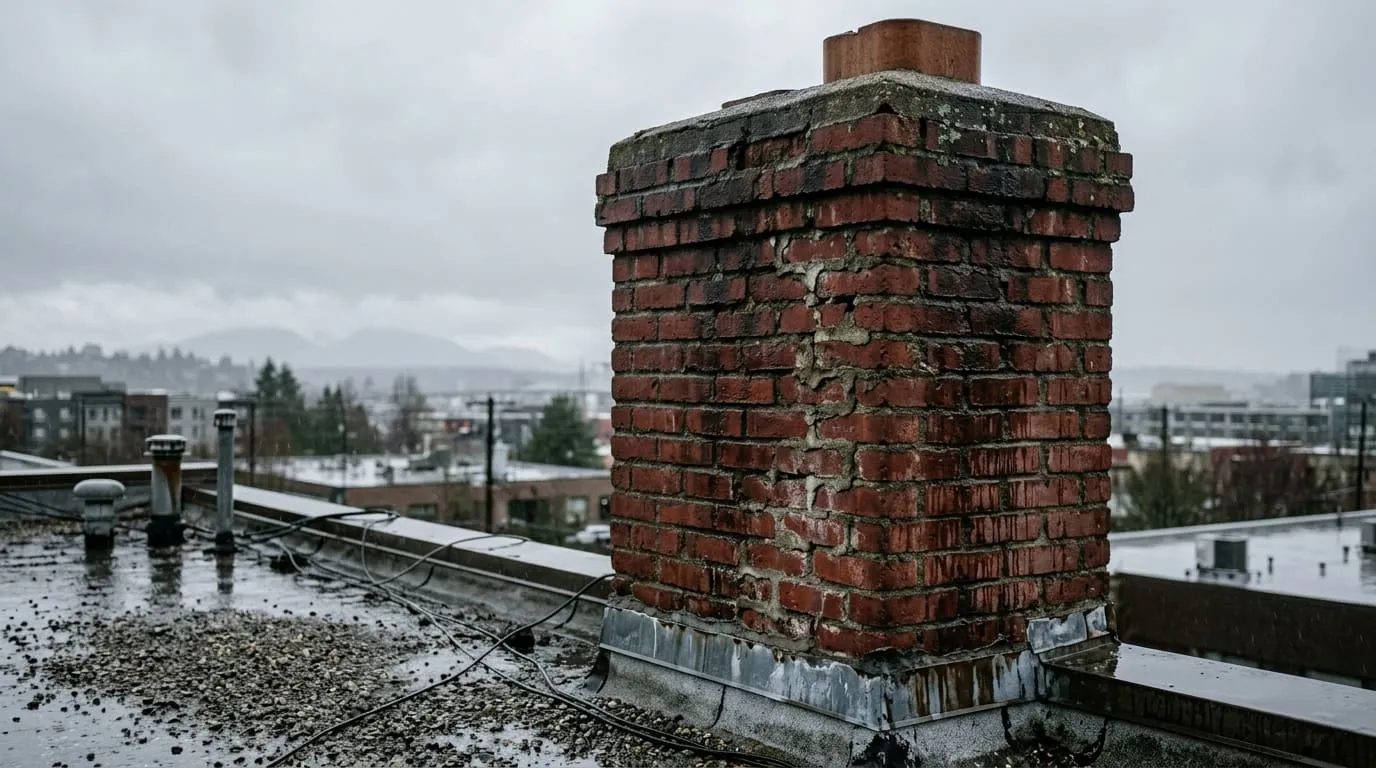
Dark water staining and eroded mortar joints on a red brick chimney stack seen against a grey sky

What drives a repair

Crown, flashing, mortar, liner — in that order

The path water actually travels through a failing chimney, and where each repair addresses it.

The short answer

Most chimney repair in Seattle starts with water, not fire. A cracked crown, an open mortar joint or failed flashing lets rain into masonry that was never designed to stay wet, and Seattle gets roughly 150 days a year of measurable rainfall to work with. Left alone, that moisture freezes and expands in winter, spalls brick faces, washes out mortar from the inside, and eventually reaches the flue liner itself. Nation Wide Chimney Sweep&Repair diagnoses from the top down — crown, flashing, mortar, liner — and repairs only what has actually failed. A hairline crack in an otherwise sound crown gets sealed, not replaced; a chimney with structural movement gets a real structural conversation, not a patch. We put the scope in writing before any work starts.

Cutaway of a masonry chimney: the cap and spark arrestor at the top, then the crown, the flue liner running down inside the brickwork, the mortar joints, the flashing where the stack meets the roof, the smoke chamber, and the firebox down at the hearth.01020304050607
  1. 01Cap and spark arrestor Keeps rain, fir needles and nesting birds out of the flue. Washington’s fire code sets what the mesh has to be.
  2. 02Crown The sloped slab across the top. Moss holds water against it for months here, and water is what opens the first crack.
  3. 03Flue liner The passage the smoke leaves by. A break in it is a safety fault, not a maintenance item.
  4. 04Mortar joints Once the crown lets water past, these wash out from the inside, where nobody is looking.
  5. 05Flashing The seam between stack and roof. More wet ceilings start at this seam than anywhere else on the chimney.
  6. 06Smoke chamber The shelf a flue brush never reaches. When a house smells of last winter, this is usually where it is coming from.
  7. 07Firebox The only part of the whole system most people ever see — and the last place a problem turns up.

Book this if you noticed

The usual signs

  • A visible crack across the crown, or water stains on the ceiling near the chimney.
  • Mortar joints that are crumbling, missing, or washing out when it rains.
  • Bricks that are flaking or spalling on their outer face.
  • A chimney that visibly leans, or has separated slightly from the house at the roofline.

Not sure if it is cosmetic or structural? Call (206) 866-2929 and describe it — we will scope a proper diagnosis.

What is included

Repair, scoped plainly

Included

  • Crown repair or full replacement with a proper sloped, overhanging drip edge
  • Repointing of eroded or missing mortar joints
  • Flashing replacement where the stack meets the roof
  • Stainless steel flue liner installation or repair, sized to the appliance

Not included

  • Cosmetic-only crack sealing on a chimney with signs of real structural movement — that gets a structural conversation instead
  • Work on load-bearing supports without the required Seattle SDCI permit, which we pull when a job needs one

A chimney with signs of real structural movement gets a structural conversation first, not a cosmetic patch.

The visit

How a repair actually goes

  1. 1

    Full diagnosis

    We check the crown, the flashing, the mortar joints and, where warranted, the flue liner, from the ground and from the roof.

  2. 2

    Written scope

    You get a written description of what has actually failed and what fixing it involves, before any work starts.

  3. 3

    Weather protection

    If repair has to wait for a proper weather window, the affected area gets wrapped and tented against rain until work begins.

  4. 4

    The repair itself

    Crown rebuild, repointing, flashing replacement or liner work — done to the scope agreed on, not expanded without telling you first.

  5. 5

    Final check

    A finished repair gets inspected before we call the job done, confirming drainage, seal and fit.

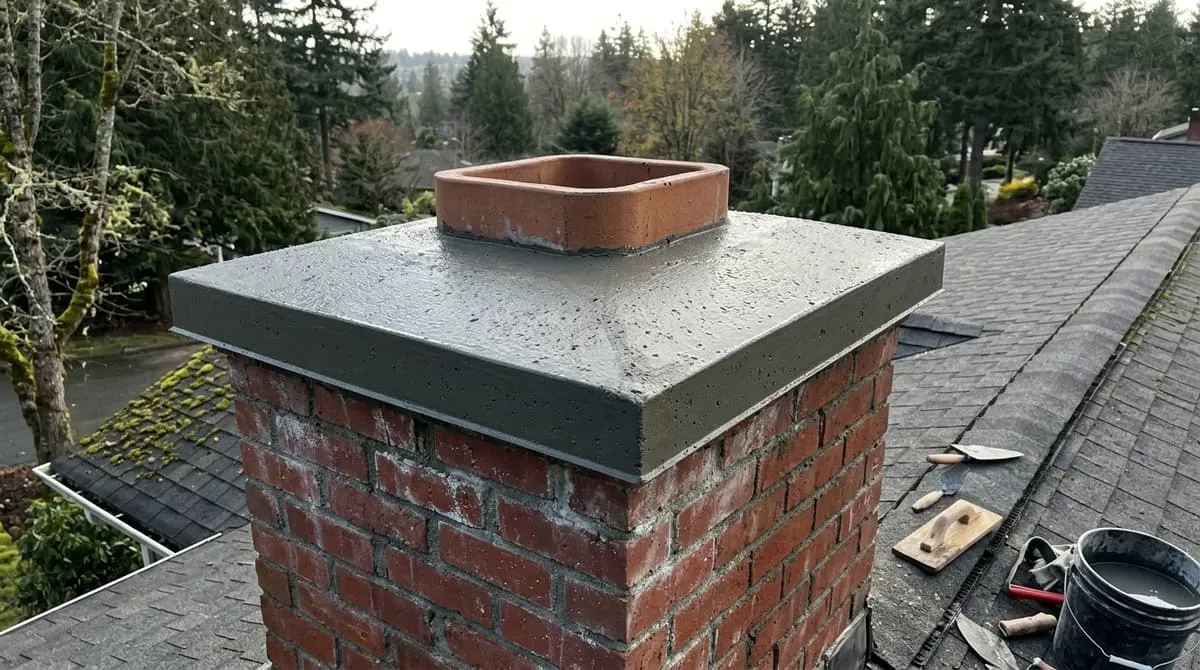
A freshly poured concrete chimney crown with a sloped surface and an overhanging drip edge, seen from above on a roof

What drives the scope

What drives a repair

The factors that actually change the scope of chimney repair work, stated plainly and without a dollar figure attached to any of them.

Most common trigger
Cracked crown or open mortar joint
Regional driver
~150 wet days a year in the Seattle area
Seismic factor
Seattle Fault and Cascadia subduction zone exposure
Permit threshold
Structural or load-bearing work, per Seattle SDCI
Liner material used
Stainless steel, sized to the appliance

Washington State Fire Code (based on the International Fire Code) and NFPA 211 condition definitions.

In detail

Why rain, not fire, drives most repair calls here

How a hairline crown crack becomes a full repair scope if a wet season goes by unaddressed.

01Why repair calls cluster around water, not fire

Ask what actually brings a Seattle chimney to the point of needing repair, and the honest answer is rain more often than anything to do with burning a fire.

Continue reading

The crown is the slab poured across the top of the stack, sloped so rain runs off it instead of standing on it, and it takes the weather before anything else does, and it is also the piece most exposed to direct weather. A hairline crack there, left through one more wet season, lets water travel down into the brick and mortar below. From there it works two ways at once: freezing and expanding through winter cold snaps, which spalls brick faces and cracks mortar from the inside, and simply washing mortar out of the joints a little at a time with every heavy rain. By the time a homeowner notices staining on a ceiling near the chimney, the water has usually been getting in for a while.

02Diagnosing from the top down

We start every repair call the same way a Level 2 or Level 3 inspection would: at the crown, then the flashing where the stack meets the roof, then the mortar joints down the visible face of the chimney, and finally the flue liner if there is reason to think water has reached that far.

Continue reading

That order matters because it is also the order failures usually cascade in — a cracked crown causes a flashing problem before it causes a liner problem, and treating the liner while ignoring the crown just means the same water finds a new way in next winter. What we find at each stage determines the scope, and we write that scope down before quoting or starting anything.

03What a repair actually involves

Crown work ranges from a simple seal on a hairline crack to a full recast with a proper sloped surface and an overhanging drip edge, which is what actually keeps water moving away from the masonry instead of down into it.

Continue reading

Repointing means removing failed mortar to a consistent depth and replacing it with mortar matched to the original in strength and, wherever it is visible, in color — a mismatched repair on a century-old Craftsman stack is its own kind of failure. Flashing replacement addresses the roofline seal directly, using new step flashing and counterflashing rather than a bead of sealant over the old metal, which is a common shortcut that fails again within a season or two. A flue liner gets replaced with stainless steel sized specifically to the connected appliance when the original liner has cracked or corroded.

04Structural damage is a different conversation

Most of what we repair is exactly what it looks like: weather damage to a chimney that is otherwise sound.

Continue reading

A smaller number of calls are something else — a visible lean, a gap opening between the chimney and the house at the roofline, or damage following an earthquake. Seattle sits close enough to the Seattle Fault, and within reach of the offshore Cascadia subduction zone, that unreinforced brick chimneys are a documented seismic risk here specifically, not a generic worry. When a chimney shows signs like that, we recommend a Level 3 inspection before quoting any repair, because patching a structural problem cosmetically is worse than not touching it at all.

05Permits, and when they actually apply

Seattle’s Department of Construction and Inspections does not require a permit for routine repointing that makes no structural change.

Continue reading

The line moves the moment work touches a load-bearing support or the building envelope — a full crown rebuild that changes the chimney’s structure, for instance, or work connected to a broader remodel. We tell you plainly, before quoting a job, whether it crosses that line, and we pull the permit ourselves when it does rather than leaving that step to you.

06Getting a repair scoped

Call with what you have noticed — a stain, a crack, loose mortar, a visible lean — and we will schedule a diagnosis and put the actual scope in writing before any work begins.

Continue reading

We work every day from 7 a.m. to 9 p.m. across a twenty-mile radius from central Seattle.

Reviews

What the last 41 customers actually said

5.0

41 Google reviewscounted 2026-08-25

  • 541
  • 40
  • 30
  • 20
  • 10
  • Anthony Gill

    Water started dripping into our attic during heavy rain so we knew the chimney needed attention fast. Team showed up prepared and diagnosed a completely eroded concrete crown and pulled-away flashing. …
  • Gregory Phillips

    Moved into a new-to-us house in Ballard with a gorgeous brick fireplace but no service history. Scheduled an inspection to be safe. …
  • Loretta Green

    It was important to us to feel safe about our tall chimney after the recent earthquake. The crew carefully checked it out from the inside and the roof. They found some loose cement joints and a crown that was slightly off-center. …
  • Leona Green

    The tech was sweeping the roof from the top down and took images revealing a damaged chimney crown and weak mortar joints on the chase. Clear visual proof, no hard sell!

Read all 41 reviews on Google

Questions

What people ask about repair

Does a cracked chimney crown mean I need a full rebuild?

Usually not. Most cracked crowns get resealed or recast without touching the brick below. A full rebuild is reserved for a crown that has failed structurally, not one with a hairline crack.

Why does rain cause so much chimney damage in Seattle?

Seattle gets roughly 150 days a year of measurable rainfall, and masonry that takes on water repeatedly through a wet winter freezes, expands and spalls faster than it would in a drier climate — the crown and the mortar joints take the brunt of it.

Do I need a permit for chimney repair in Seattle?

Not for simple repointing with no structural change, per Seattle’s Department of Construction and Inspections. Work on a load-bearing support or the building envelope does need one, and we handle that permitting when a job requires it.

How do I know if my chimney’s lean is a real structural problem?

Any visible lean or separation from the house at the roofline is worth a Level 3 inspection before repair — that is the depth NFPA 211 calls for when the structure itself may be compromised.

Can you match the mortar and brick on an older Seattle home?

Yes — matching the original mortar color and brick on a Craftsman-era chimney is standard practice for us, not an upcharge, because a mismatched repair looks worse than the crack it fixed.

Get a repair scoped

Describe what you have noticed — we will diagnose it and put the scope in writing before anything starts.

Or call (206) 866-2929 to book directly.

Tell us what changed.

Tell us what the fireplace is doing and what changed. Someone reads every message that comes in.

No obligation. Someone answers every day, 7 a.m. to 9 p.m.

Prefer to talk? Call (206) 866-2929, every day from 7 a.m. to 9 p.m.