Chimney cleaning · Seattle

Chimney cleaning in Seattle

A flue sweep alone leaves the smoke chamber and ash pit untouched — this covers what it misses.

No obligation. Someone answers every day, 7 a.m. to 9 p.m.

  • Roughly ninety minutes to two hours for a full firebox-to-ash-pit clean.
  • A firebox, smoke chamber and ash pit cleared down to bare surfaces.
  • Access to the firebox and, for an ash pit, its cleanout door if one exists.
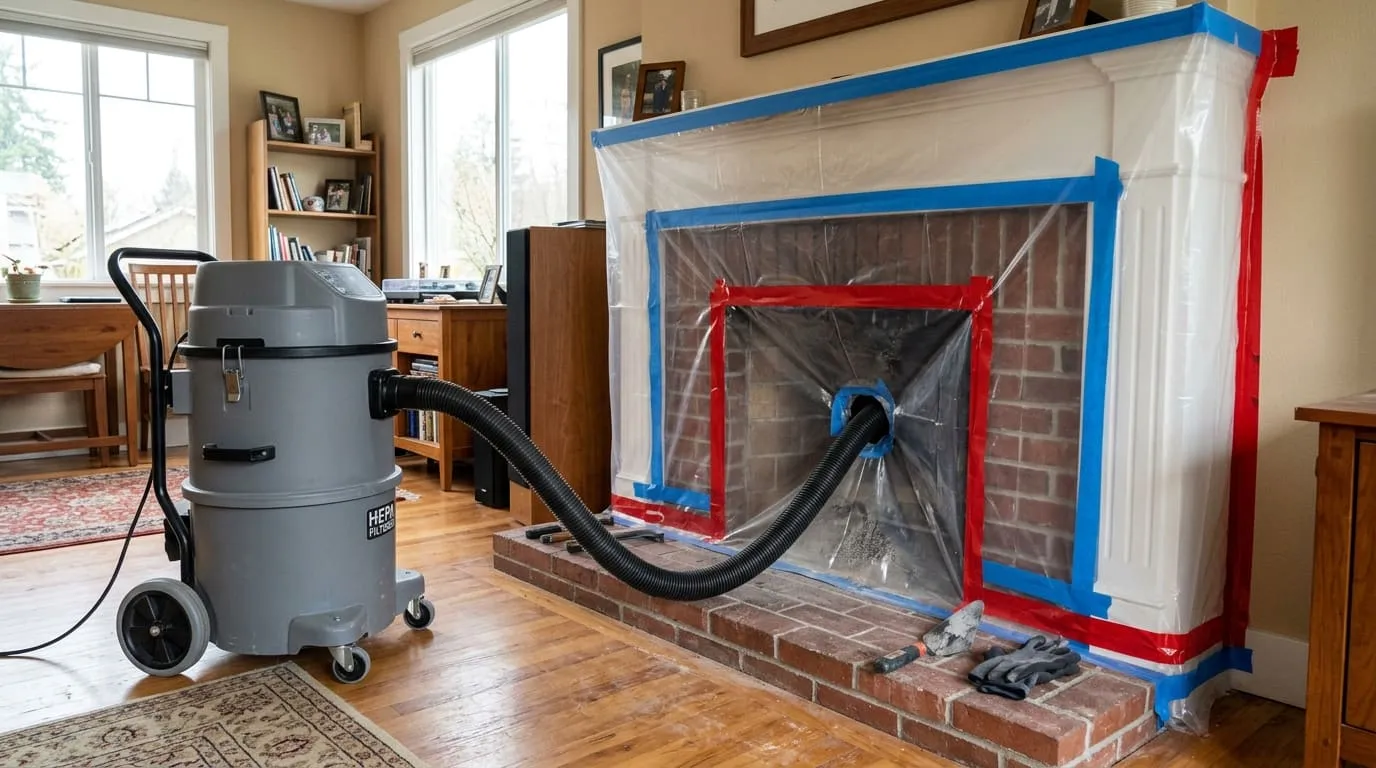
A large HEPA extraction vacuum hose sealed into a firebox opening during a chimney cleaning

What cleaning covers

Past the flue: firebox, smoke chamber, ash pit

The parts a straight flue brush cannot follow, traced on the same cutaway every service page uses.

The short answer

Chimney cleaning goes past the flue brush and into the parts a standard sweep does not fully reach: the smoke chamber directly above the firebox, where creosote and debris collect on the angled walls a straight brush cannot follow, the firebox itself down to bare brick, and the ash pit below it if the fireplace has one. Nation Wide Chimney Sweep&Repair runs this as a deeper, hands-on clean rather than a brush-and-go, vacuuming the smoke shelf by hand, clearing the ash pit fully, and wiping down glass doors and hearth surfaces, for a fireplace that has gone years without more than a basic sweep, or one being brought back into service after sitting unused.

A masonry chimney sliced top to bottom: spark-arrestor cap, crown, flue liner threaded through the brick, mortar joints, flashing at the roofline, the smoke chamber, and the firebox waiting at the hearth.01020304050607
  1. 01Cap and spark arrestor Keeps rain, fir needles and nesting birds out of the flue. Washington’s fire code sets what the mesh has to be.
  2. 02Crown The sloped slab across the top. Moss holds water against it for months here, and water is what opens the first crack.
  3. 03Flue liner Smoke's only way out of the house. A crack here is a safety issue first, a repair-list item second.
  4. 04Mortar joints Once the crown lets water past, these wash out from the inside, where nobody is looking.
  5. 05Flashing The seam between stack and roof. More wet ceilings start at this seam than anywhere else on the chimney.
  6. 06Smoke chamber The ledge just above the firebox that a straight brush pass skips entirely. A stale smoky smell come autumn usually traces back here.
  7. 07Firebox The single part of the setup most people ever lay eyes on, and, ironically, the last spot where a problem shows itself.

Book this if you noticed

The usual signs

  • A stale, sooty smell that a standard sweep did not clear.
  • Visible creosote glazing on the smoke chamber walls above the firebox.
  • An ash pit that has not been emptied in years, or ever.
  • The fireplace sat unused for a season or more and needs a full check before its first fire.

Not sure this is what you need instead of a standard sweep? Call (206) 866-2929 and we will confirm.

What is included

Cleaning, scoped plainly

Included

  • Full firebox cleaning down to bare brick or metal
  • Hand-cleaning of the smoke chamber above the firebox
  • Complete ash pit clearing where one exists
  • Sealed HEPA vacuum extraction for the entire visit
  • Wipe-down of glass doors and hearth surfaces

Not included

  • The flue liner brush pass itself, which is billed as a standard chimney sweep if it has not been done recently
  • Structural repair to the firebox brick or the smoke chamber, quoted separately if found

The flue brush pass itself is billed as a standard sweep if it has not been done recently. Cleaning goes further, into the firebox and beyond.

The visit

How a cleaning visit goes

  1. 1

    Firebox stripped to bare brick

    Loose soot, old ash and surface creosote get cleared from every wall of the firebox, past a simple wipe-over.

  2. 2

    Smoke chamber, by hand

    The angled walls above the firebox, the part a straight flue brush cannot reach, get cleaned by hand with a sealed vacuum running the whole time.

  3. 3

    Ash pit cleared

    If the fireplace has an ash pit, it gets fully emptied and vacuumed, down to the base rather than skimmed at the top.

  4. 4

    Glass and hearth wiped down

    Fireplace doors and the surrounding hearth surface get a final wipe so the room looks better than when we arrived.

A large HEPA extraction vacuum hose sealed into a firebox opening during a chimney cleaning

Cleaning specifications

Cleaning, by the numbers

What a deep clean actually covers, measured against the same components an NFPA 211 inspection checks.

Components cleaned
Firebox, smoke chamber, ash pit
Extraction method
Sealed HEPA vacuum
Recommended for
Fireplaces unused for a season or more
Glass and hearth
Wiped down before we leave
Typical visit length
75–120 minutes

NFPA 211: Standard for Chimneys, Fireplaces, Vents, and Solid Fuel-Burning Appliances.

In detail

Why the smoke chamber needs its own attention

What a brush leaves behind, and how a hands-on clean reaches it.

01The parts a flue brush never touches

A standard sweep is built around one job: running a brush the length of the flue liner.

Continue reading

That is the right tool for the flue, and the wrong tool for everything below it. The smoke chamber, the widening, angled cavity directly above the firebox where smoke slows down before it draws up the flue, has sloped walls a straight brush cannot follow, and creosote collects there in shapes a flue brush was never designed to clear. Below the firebox, an older masonry fireplace often has an ash pit: a storage cavity with its own small cleanout door, sometimes not opened in years. Chimney cleaning is the service built for both of those spaces, done by hand rather than by brush alone.

02Who actually needs this

Most fireplaces that get an annual sweep never need a separate cleaning visit; the smoke chamber and ash pit stay reasonably clear on their own with regular light use.

Continue reading

Cleaning earns its place in three situations: a fireplace that has gone several years with nothing more than a quick sweep, one being brought back into service after sitting unused for a season or longer, and any firebox with visible glazed creosote on the smoke chamber walls, which is denser and harder to remove than the loose soot a brush clears easily. If none of that describes your fireplace, a standard sweep is very likely all it needs, and we will say so rather than sell a deeper service nobody asked for.

03What the visit actually covers

We start at the firebox and work upward and downward from there. The firebox itself gets cleared to bare brick or metal, past a simple sweep across the surface; corners, the damper area and the back wall all get attention.

Continue reading

From there, the smoke chamber gets cleaned by hand: reaching up past the damper with a sealed vacuum running the entire time, breaking loose the glazed creosote that builds on its sloped walls and pulling it out before it can fall back into the firebox. If the fireplace has an ash pit, its cleanout door gets opened and the cavity fully emptied and vacuumed, down to the base rather than scooped from the top, which leaves compacted ash sitting there indefinitely. We finish by wiping down the glass doors and the hearth surface, so the room reads as cared for, not merely serviced.

Because cleaning reaches into spaces with denser, more stubborn buildup than a routine flue sweep, the dust load during the visit runs higher, and that is exactly why the sealed HEPA vacuum stays connected to the firebox opening for the entire job rather than just the brushing portion. Floor protection goes down first, the same as any visit, and the vacuum runs continuously while hands are inside the smoke chamber or the ash pit. Most of the extra time this service takes is the extra care spent keeping debris contained, not extra scrubbing.

04Booking a cleaning in Seattle and King County

If you are not sure whether your fireplace needs a standard sweep or the deeper cleaning service, tell us how long it has been since the last visit and whether you have noticed a smell, visible glazing on the smoke chamber, or an ash pit that has never been emptied.

Continue reading

We will recommend the right service rather than the more expensive one by default. We work every day from 7 a.m. to 9 p.m. across a twenty-mile radius from central Seattle, and the same crew that answers the phone is the one that shows up with the vacuum.

Reviews

What customers actually said

5.0

35 Google reviews

A selection of our 5-star reviews on Google.

  • Anthony G.

    Water started dripping into our attic during heavy rain so we knew the chimney needed attention fast. Team showed up prepared and diagnosed a completely eroded concrete crown and pulled-away flashing. They removed the old crown material, poured a new sloped reinforced one with drip edge, rebedded all flashing using lead boots and roof cement, cleaned wet debris from the flue, and tested for leaks with a garden hose afterward. Attic stayed dry through the next storm. Very meticulous work and clean job site.
  • Gregory P.

    Moved into a new-to-us house in Ballard with a gorgeous brick fireplace but no service history. Scheduled an inspection to be safe. Camera showed light glaze creosote, bird nesting material in the upper flue, and minor mortar erosion on the stack exterior. They removed the nest carefully, performed a full rotary brush clean, tuck-pointed about fifteen exterior bricks, applied a breathable sealer, and fitted a new copper cap with spark screen. Draft is strong and steady now. Patient explanations made first-time homeowners feel confident.

Read all reviews on Google

Questions

What people ask about cleaning

How is chimney cleaning different from a chimney sweep?

A sweep focuses on brushing the flue liner. Cleaning goes further, into the firebox, the smoke chamber above it and the ash pit, parts a straight flue brush cannot reach or was never meant to clean.

Do I need cleaning if I already had my chimney swept?

Only if the smoke chamber or ash pit have gone untouched for a long time, or the fireplace sat unused for a season or more. Ask when you book and we can tell you which service actually fits.

What is an ash pit, and does my fireplace have one?

It is a storage cavity below the firebox floor with its own cleanout door, common in older masonry fireplaces. Not every fireplace has one — we can confirm during the visit if you are not sure.

Will cleaning leave dust in the rest of the house?

No — the same sealed HEPA extraction we use for a sweep runs for the entire cleaning visit, and we wipe down the glass and hearth before we leave.

Book a cleaning

Tell us how long it has been since the smoke chamber or ash pit were last touched.

Or call (206) 866-2929 to book directly.

Tell us what changed.

Tell us what the fireplace is doing and what changed. Someone reads every message that comes in.

No obligation. Someone answers every day, 7 a.m. to 9 p.m.

Prefer to talk? Call (206) 866-2929, every day from 7 a.m. to 9 p.m.