
Kent · WA
Chimney sweep and repair in Kent
Valley-floor drainage and East Hill’s older plateau stock: two different chimney conditions, one crew.
No obligation. Someone answers every day, 7 a.m. to 9 p.m.
The short answer
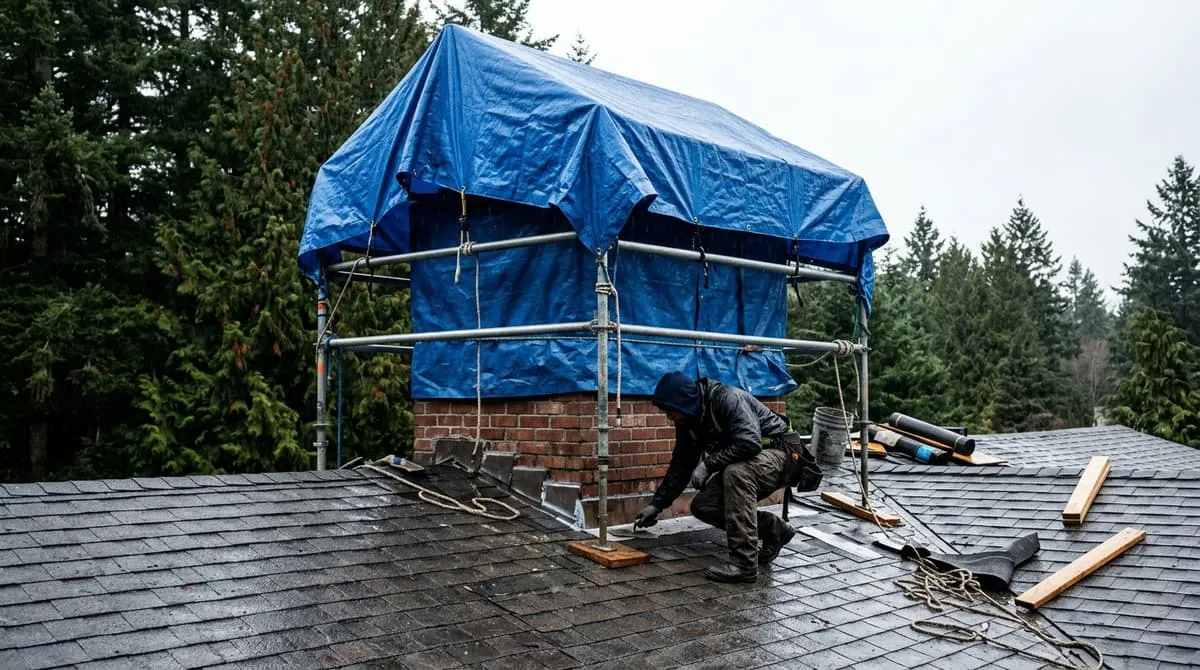
Kent splits into two very different chimney conditions depending on elevation. The valley floor sits on the Green River floodplain, where a high water table pushes groundwater into crawlspaces and slows drainage after heavy rain, and that same dampness works its way up into a chimney’s base and lower masonry over time. East Hill, built up mostly from the 1940s through the 1990s on the plateau above the valley, drains better and generally shows less moisture damage but still needs the same annual sweep and inspection. Nation Wide Chimney Sweep&Repair checks the base of the chimney and the crawlspace connection on every valley-floor call specifically because that is where Kent’s drainage problem shows up first.
Local specifics
What is true about Kent
- 01
The Kent Valley sits on the Green River floodplain, and before the Howard A. Hanson Dam was completed in the 1960s the valley flooded regularly; today the flat floodplain still gives many valley-floor homes a high water table and slow drainage after heavy rain.
- 02
East Hill sits on the plateau above the Kent Valley floor, and much of its housing was built between 1940 and 1999, with a concentration from 1940 to 1969, older on average than most of the valley floor’s more recent industrial-adjacent development.
- 03
The Kent Valley’s saturated, low-density floodplain soils fall within the category King County’s own Sensitive Areas Ordinance flags for liquefaction risk. That is a different structural consideration from East Hill’s firmer plateau soils, and one worth factoring into how an older valley-floor chimney’s foundation gets assessed.
Housing stock
What the housing stock means for the chimney work
Kent’s housing splits by elevation more than by era. Valley-floor homes sit on the Green River floodplain with a high water table and slow drainage after rain, which can carry dampness up into a chimney’s base and lower masonry over years even when the crown and cap look fine. East Hill’s plateau housing, mostly built between 1940 and 1999, drains better and shows less moisture-driven damage, but its older stock, much of it from the 1940s and 1950s, still carries the mortar and crown wear typical of a house that age anywhere in King County.
Neighbourhoods: East Hill · West Hill · Scenic Hill · Downtown Kent
Approximate coverage; call to confirm a specific address.
Services here
What we do in Kent
Reviews
What customers actually said
5.0
35 Google reviewscounted
A selection of our 5-star reviews on Google.
Anthony G.
Water started dripping into our attic during heavy rain so we knew the chimney needed attention fast. Team showed up prepared and diagnosed a completely eroded concrete crown and pulled-away flashing. They removed the old crown material, poured a new sloped reinforced one with drip edge, rebedded all flashing using lead boots and roof cement, cleaned wet debris from the flue, and tested for leaks with a garden hose afterward. Attic stayed dry through the next storm. Very meticulous work and clean job site.
Gregory P.
Moved into a new-to-us house in Ballard with a gorgeous brick fireplace but no service history. Scheduled an inspection to be safe. Camera showed light glaze creosote, bird nesting material in the upper flue, and minor mortar erosion on the stack exterior. They removed the nest carefully, performed a full rotary brush clean, tuck-pointed about fifteen exterior bricks, applied a breathable sealer, and fitted a new copper cap with spark screen. Draft is strong and steady now. Patient explanations made first-time homeowners feel confident.
Questions
What people ask about Kent
Does the Kent Valley’s flooding history still affect chimneys today?
The Howard A. Hanson Dam stopped the regular flooding decades ago, but the valley floor still has a high water table and slow drainage after heavy rain, and that groundwater can work into a chimney’s base over time; it is something we check specifically on valley-floor calls.
Is East Hill’s chimney stock different from the valley floor’s?
Generally, yes. East Hill sits higher and drains better, with housing mostly from 1940 to 1999, so we see less moisture-driven base damage there than on valley-floor properties, even on houses of a similar age.
How do I know if my Kent chimney has a drainage problem?
Staining or crumbling at the base of the chimney, a musty smell near the firebox, or visible dampness in an adjacent crawlspace are the signs worth a call about, especially on a valley-floor property.
Do you serve both the Kent Valley and East Hill?
Yes. East Hill, West Hill, Scenic Hill, downtown Kent and the valley floor all sit inside our twenty-mile radius from central Seattle.
Book a visit in Kent
Tell us what you have noticed. We will confirm the right service.
Or call (206) 866-2929, every day, 7 a.m. to 9 p.m.