Creosote Buildup Stages: Seattle Homeowner Safety Guide
According to the National Fire Protection Association, failure to clean home heating equipment, primarily solid-fuel appliances like wood stoves and fireplaces, is a leading cause of home structure fires. In the Pacific Northwest, this hazard is compounded by unique environmental factors that directly influence how wood burns and how byproducts accumulate inside your flue. For homeowners in Seattle and the surrounding Puget Sound area, understanding the progression of creosote buildup is not just about home maintenance, it is a critical component of household safety and structural preservation.
What Is Creosote and Why Does It Form in Your Chimney?
Creosote is a highly flammable, dark, and gummy residue that deposits on the interior walls of your chimney flue. It forms when wood smoke, vapor, gases, unburned wood particles, hydrocarbon volatile matter, and high moisture content escape up the chimney. As these warm vapors rise and come into contact with the relatively cooler surfaces of a cold chimney flue, they condense into a liquid form, which then dries into various stages of solid or semi-solid carbon crust.
Several factors accelerate this condensation process. Burning unseasoned, wet firewood is a primary culprit, as the fire must use a significant amount of its energy just to boil off the water within the wood, resulting in a cooler, smoldering fire that produces heavy, moisture-laden smoke. Restricted airflow, caused by closed dampers or an improperly sized flue, also slows the escape of smoke, giving the particulate matter more time to cool and adhere to the masonry or metal liner.
What Are the Characteristics of Stage 1 Creosote Buildup?
Stage 1 creosote is primarily composed of loose, dusty soot. It has a high concentration of carbon and appears as a powdery, dry, black coating along the walls of the chimney liner. Because it is highly dry and lacks a significant amount of condensed wood tar, it is relatively easy to brush away using basic chimney sweeping brushes.
This initial stage typically forms when firewood is burned efficiently with a plentiful supply of oxygen, allowing for complete combustion. However, even the most efficient fireplace systems will develop Stage 1 deposits over time. While Stage 1 is the least hazardous form, it still represents a combustible material. If left to accumulate, it can restrict draft and provide the foundation for more severe, sticky layers to adhere to. Routine, professional chimney sweeping is the most effective way to address Stage 1 soot before it undergoes chemical changes.
How Does Stage 2 Creosote Differ from Soot?
Stage 2 creosote presents a more complex cleaning challenge. It appears as crunchy, flaky, or shiny black deposits that adhere tightly to the flue tile or liner. Unlike the powdery soot of Stage 1, Stage 2 creosote resembles hardened black flakes or a thick, bubbly tar that has dried into a hard crust. It cannot be easily brushed away with a standard wire brush; instead, it often requires specialized rotary loops, scrapers, or mechanical cleaning tools to safely dislodge.
If you want it handled correctly the first time, consider professional chimney cleaning in Seattle.
This stage forms when the temperature of the flue gases drops below the condensation point regularly, or when air supply to the fireplace is restricted to create longer, slower burns. The unburned wood tars condense into a thick liquid, draping over the existing soot, and then dry out as the fireplace cools. Stage 2 deposits restrict airflow significantly, which in turn reduces draft and causes the fireplace to run even colder, accelerating the accumulation process toward the final, most dangerous stage.
Why Is Stage 3 Creosote Glaze the Most Dangerous?
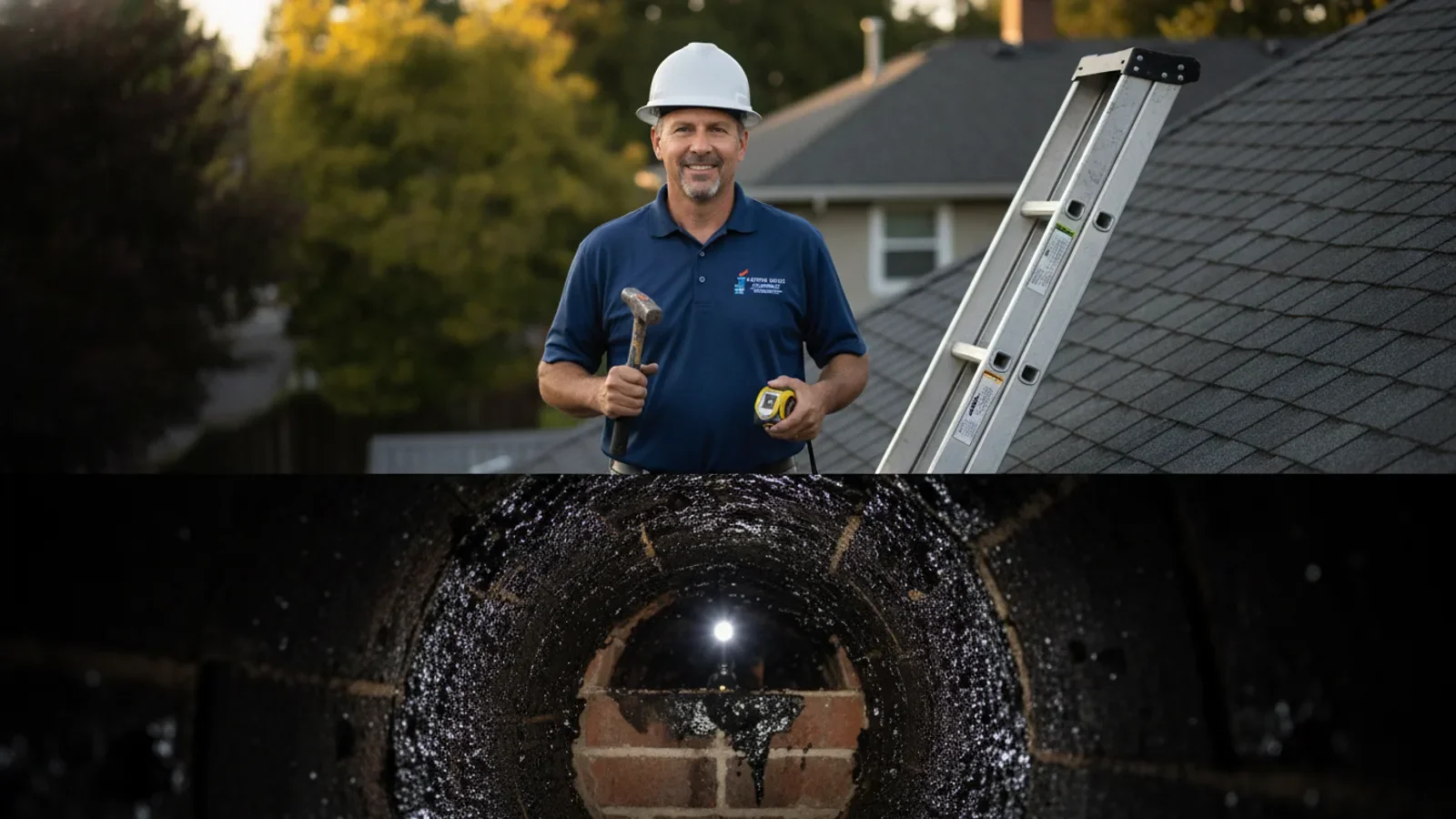
Stage 3 creosote is a highly concentrated, dense, and glossy fuel source that resembles poured black tar or a hard, glassy glaze running down the inside of the flue. It is extremely combustible. If a spark or high-temperature gas reaches this layer, it can easily ignite, leading to a intense, fast-moving chimney fire that can exceed temperatures of two thousand degrees Fahrenheit, easily cracking masonry, warping metal liners, and spreading to the wooden structure of your home.
Stage 3 glaze forms under highly inefficient burning conditions, such as burning green or wet wood, keeping the damper too restrictive, or operating a fireplace in an uninsulated chimney situated on an exterior wall. The tar vapors condense so rapidly and in such high volume that they run down the flue wall as a liquid before hardening into a thick, plastic-like sheet. Removing Stage 3 glaze is a specialized process that often requires chemical treatments to break down the glossy bond or mechanical rotary equipment, making a professional chimney cleaning essential to restore safety.
How Does Seattle’s Wet Climate Accelerate Creosote Accumulation?
Seattle’s signature climate, characterized by persistent drizzle, high humidity, and damp winters, plays a direct role in how quickly creosote transitions through these dangerous stages. The external masonry of Seattle chimneys absorbs ambient moisture from the damp Pacific Northwest air. When you light a fire, this moisture must evaporate from the masonry, keeping the flue temperatures much lower for a longer duration of the burn. A colder flue translates directly to rapid condensation of smoke particles, quickly turning Stage 1 soot into Stage 2 and Stage 3 glaze.
Additionally, local homeowners often burn softwoods like Douglas fir, which are abundant in Washington. While Douglas fir is an excellent fuel source when seasoned correctly, if it is stored outdoors in our humid climate without proper cover, it quickly reabsorbs moisture. Burning damp wood in a cold, moisture-saturated masonry chimney creates a perfect storm for rapid chemical condensation, causing dangerous glaze to build up in a fraction of the time it would in drier, warmer climates. This environmental pressure is a key reason why keeping an eye out for early warning signs is vital, as outlined in our guide on the signs you need a chimney sweep in Seattle.
Many Seattle homeowners rely on expert chimney cleaning in Seattle for exactly this.
Can You Safely Remove Creosote Buildup Yourself?
While homeowners can perform basic maintenance such as clearing ashes and checking the damper, attempting to remove advanced creosote buildup yourself is highly discouraged. Stage 1 soot can be brushed away, but without professional-grade inspection cameras, it is impossible to determine if there are pockets of Stage 2 or Stage 3 glaze higher up in the flue system. Using standard homeowner brushes on hard, glazed creosote will simply slide over the slick surface without removing it, giving a false sense of security.
Furthermore, Stage 3 creosote requires specialized chemical softeners or heavy-duty mechanical rotary whips operated by trained technicians to avoid destroying the underlying clay tiles or metal liners. Damaging a flue liner during a aggressive DIY cleaning can create pathways for carbon monoxide and heat to escape into your walls, creating a severe fire and health hazard. For safety, always rely on a certified chimney sweep in Seattle who has the correct tools, protective gear, and diagnostic cameras to verify the flue is completely clean and structurally sound.
What Happens If You Ignore Creosote and Avoid Sweeping?
Neglecting annual maintenance allows creosote to quietly accumulate, moving from a dusty powder to a thick, flammable glaze. As the interior diameter of your flue narrows due to these deposits, the draft of your fireplace degrades. This restriction forces dangerous combustion byproducts, including fine soot particles and odorless carbon monoxide gas, back down into your living room instead of venting safely outside.
Over time, the highly acidic nature of creosote and soot begins to attack the structural integrity of your chimney system. When mixed with the moisture common in Washington’s atmosphere, these deposits form a corrosive slurry that eats away at mortar joints, clay tile liners, and metal damper assemblies. This deterioration leads to costly structural damage, requiring extensive chimney repair seattle to resolve. In the worst-case scenario, ignoring this buildup results in a catastrophic chimney fire that can permanently destroy your home.
Summary
Creosote buildup is an inevitable byproduct of enjoying a wood-burning fireplace, but letting it progress to dangerous, glaze-like stages poses a severe threat to your home and family. Seattle’s damp weather and cool winters speed up this hazard, making regular maintenance a necessity rather than an afterthought. If you suspect your fireplace has developed crunchy, flaky Stage 2 deposits or glossy Stage 3 glaze, protect your home by scheduling an inspection with the experienced team at Nation Wide Chimney Sweep & Repair today.