Common Myths About Wet Seattle Weather and Chimney Water Damage
Brick is one of the most durable building materials ever used, yet chimneys in the Seattle area routinely develop serious structural problems within a decade or two of construction or last repair. The reason is not poor craftsmanship or inferior materials in isolation. It is the specific combination of near-constant moisture, mild but persistent freeze-thaw cycles, and the way masonry absorbs and releases water that makes the Pacific Northwest genuinely hard on chimneys. Yet a surprising amount of misinformation circulates among Seattle homeowners about what is actually happening to their masonry, and that misinformation leads to delayed repairs, wasted money on the wrong fixes, and, in some cases, real safety hazards.
This guide works through the most common myths about Seattle chimney water damage, replacing each one with an accurate picture of how Pacific Northwest conditions affect brick, mortar, and the overall chimney structure. If you have already noticed cracking, staining, or spalling on your chimney, our chimney repair Seattle guide covers the structural assessment and repair options in detail.
Myth: A Little Surface Staining Is Just Cosmetic
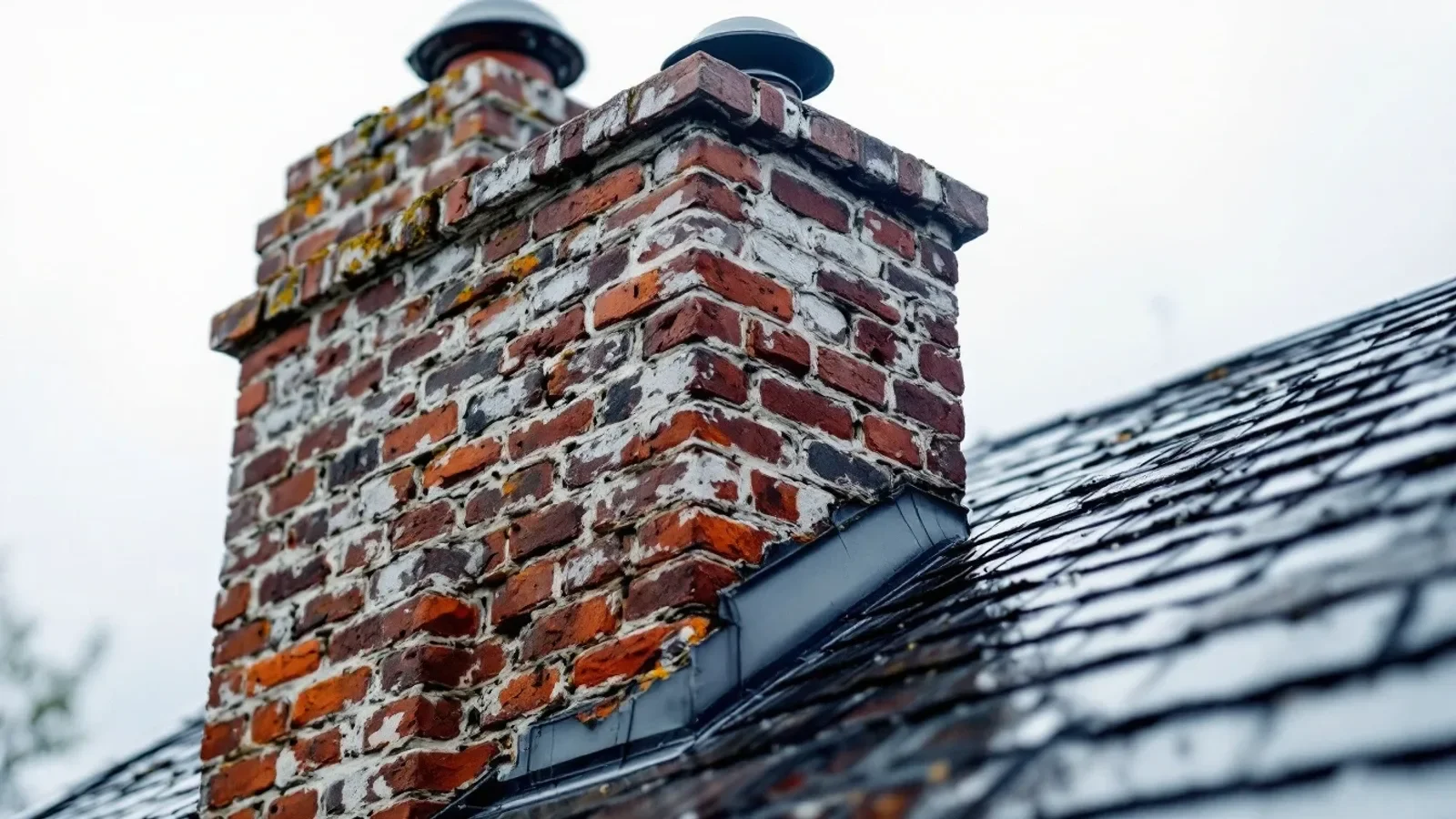
Reality: White or gray staining on chimney brick, called efflorescence, is one of the most misread warning signs in Seattle masonry. Efflorescence forms when water moves through brick or mortar, dissolves soluble salts inside the material, and then deposits those salts on the surface as it evaporates. The staining itself is not the problem. The water movement that caused it is.
In Seattle’s climate, where annual rainfall regularly exceeds 37 inches and the city records measurable precipitation on roughly 150 or more days per year, chimneys face sustained wetting cycles that keep masonry damp for extended periods. When water is consistently moving through your chimney’s brick or mortar joints, it is also carrying those materials away, weakening the structure from the inside. By the time efflorescence is visible from the ground, moisture infiltration has typically been occurring for some time. Treating the stain without addressing the water pathway leaves the underlying deterioration continuing unseen.
Myth: Seattle Doesn’t Get Cold Enough for Freeze-Thaw Damage
Reality: This is one of the most consequential myths for Seattle homeowners. Many people associate freeze-thaw masonry damage with places like Minnesota or Chicago, where temperatures drop far below freezing for weeks at a time. Seattle’s winters are comparatively mild, but that mildness is actually what makes freeze-thaw damage so insidious here.
Freeze-thaw damage requires two things: water inside the masonry pores and temperatures that cycle across the freezing point. Seattle’s winter temperatures routinely hover between the mid-twenties and the low forties Fahrenheit, crossing 32 degrees multiple times in a single week, sometimes multiple times in a single day. Each crossing expands water inside brick and mortar joints by roughly nine percent as it freezes, then contracts it as it thaws. Chimneys in Seattle can experience far more individual freeze-thaw cycles in a season than a chimney in a colder climate that simply stays frozen from November through March. The cumulative mechanical stress of dozens of small expansion-contraction events is what causes mortar joints to crumble and brick faces to spall, and it happens quietly, one cycle at a time.
For a closer look at what that spalling and joint deterioration looks like in practice, see signs your Seattle chimney needs tuckpointing.
Myth: If the Chimney Isn’t Leaking Inside, Water Isn’t Getting In
If you want it handled correctly the first time, consider professional chimney repair in Seattle.
Reality: Interior water stains on the ceiling or firebox are a late-stage symptom. Moisture can infiltrate Seattle chimney masonry for years before it ever reaches the interior living space in a visible way. The water has many places to go first: it saturates mortar joints, migrates into the chimney’s interior wythe of brick, pools on the smoke shelf, or works its way into the flashing system at the roofline.
Seattle’s persistent drizzle and horizontal rain driven by Puget Sound weather systems means chimneys here are exposed to moisture from angles that straight-down rainfall does not capture. Wind-driven rain presses against the chimney’s sides, infiltrating hairline cracks in mortar that would otherwise drain quickly. The result is that a chimney can be actively deteriorating structurally while the homeowner sees no interior water evidence at all. A professional chimney inspection is the only reliable way to assess what is happening inside the masonry and at the crown and cap before interior damage appears. Our Seattle chimney repair and inspection overview explains what a thorough structural assessment involves.
Myth: Applying Waterproof Sealant Solves the Water Problem
Reality: Waterproof sealant is a useful tool in the right circumstances, but it is frequently applied as a substitute for needed repairs rather than as a complement to them. Sealing over cracked or deteriorating mortar joints traps moisture that is already inside the masonry. Because the sealant blocks the evaporation pathway, that trapped moisture has nowhere to go except deeper into the structure, accelerating the very damage the homeowner was trying to prevent.
There is also an important distinction between film-forming sealants, which coat the surface and block both water entry and vapor transmission, and penetrating water repellents, which allow masonry to breathe while reducing liquid water absorption. For Seattle chimneys, vapor-permeable penetrating repellents are generally appropriate when applied to sound, well-pointed masonry. Film-forming products applied to masonry with existing mortar joint damage or micro-cracking in Seattle’s wet climate can create conditions where spalling accelerates noticeably within a season or two.
The correct sequence is: repair first, then protect. Sealant applied to a chimney with compromised mortar joints is not a repair. It is a cosmetic overlay on a structural problem. See preventing chimney leaks after Seattle repairs for guidance on how waterproofing fits into a proper post-repair maintenance plan.
Myth: Chimney Caps Are Optional in the Pacific Northwest
Reality: If anything, chimney caps are more important in Seattle than in drier climates. A chimney without a cap is an open vertical column exposed directly to Pacific Northwest rainfall, and Seattle’s weather is nothing if not persistent. Water entering through an uncapped flue saturates the flue liner, the smoke chamber, and the firebox, and it does so every time it rains, which in Seattle is often.
Many Seattle homeowners rely on expert chimney repair in Seattle for exactly this.
Beyond direct water entry, uncapped Seattle chimneys also collect moss, lichen, and organic debris at a higher rate than chimneys in drier regions. Moss and lichen are not merely aesthetic concerns on masonry. They hold moisture against the chimney surface continuously, including during periods when the masonry would otherwise dry out, and their root structures penetrate mortar joints over time. Seattle’s mild, damp conditions are ideal for biological growth on north-facing and shaded chimney surfaces in particular. A properly fitted stainless steel chimney cap with a mesh skirt addresses both direct water infiltration and biological growth simultaneously.
Myth: Tuckpointing Is Just Cosmetic Grout Work
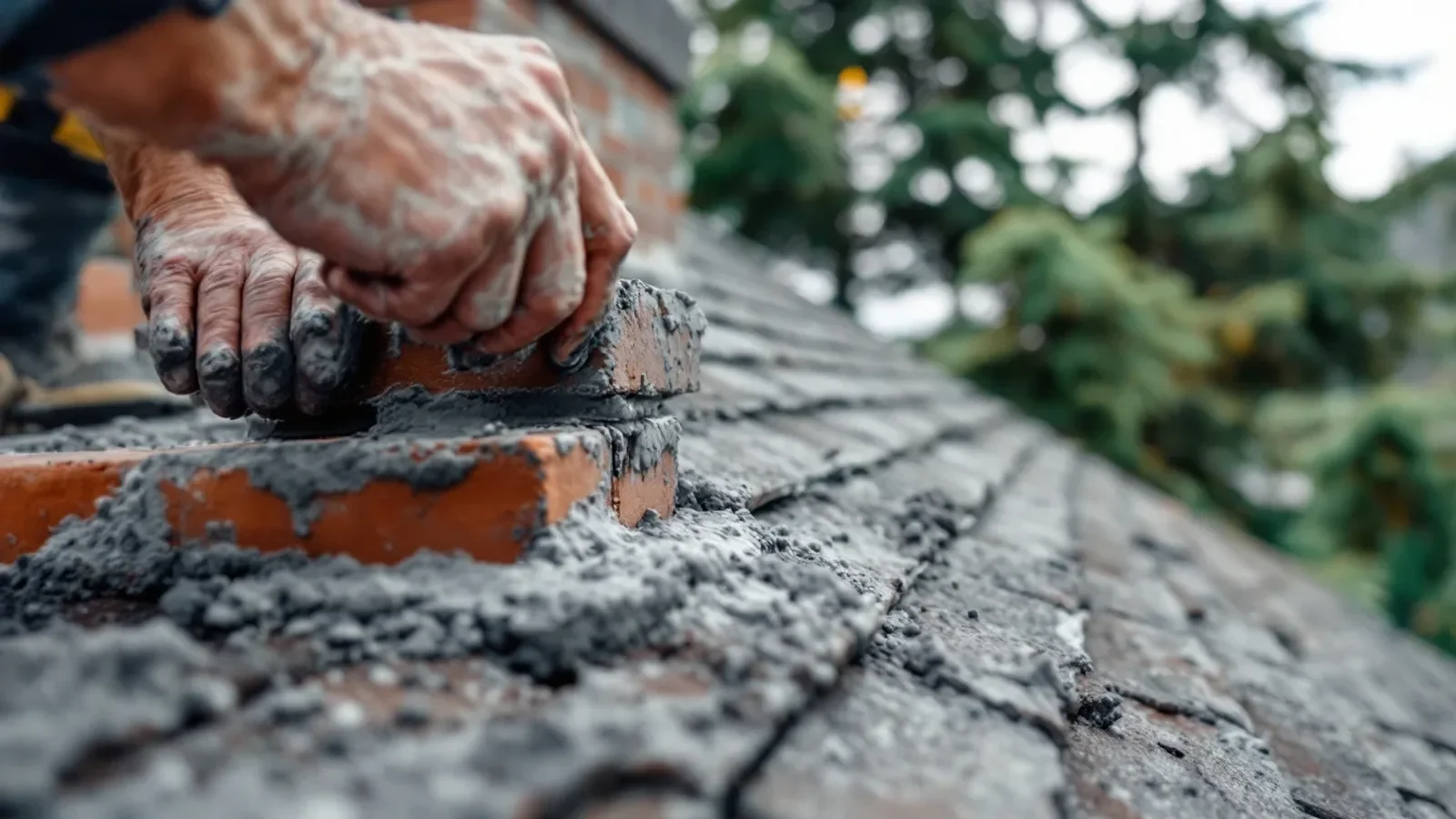
Reality: Tuckpointing, the process of removing deteriorated mortar from chimney joints and replacing it with fresh mortar, is a structural repair, not a cosmetic one. Mortar joints are the primary moisture barrier in a masonry chimney. When they erode, crack, or crumble, water has a direct pathway into the brick and into the chimney’s interior. In Seattle’s climate, where mortar is under sustained moisture stress year-round, joint deterioration is one of the most common causes of progressive chimney damage.
The distinction matters because tuckpointing done at the right time, when joint erosion is present but the brick itself is still sound, can extend a chimney’s service life considerably without requiring partial or full rebuilding. Delayed tuckpointing, on the other hand, allows water to reach the brick faces and the structural courses behind them, eventually making a more extensive repair necessary. The tuckpointing vs. chimney rebuilding comparison for Seattle homes covers how to evaluate which scope of work a given chimney actually needs.
Myth: Chimney Damage Is Obvious and You’ll Know When It Needs Repair
Reality: Much of the water damage that accumulates in Seattle chimneys is not visible from the ground or even from a casual close-up inspection. Mortar joint erosion in the middle and upper courses of a chimney, micro-cracking in the crown, flashing separation at the roofline, and spalling on the back face of the chimney stack away from the street are all common findings in professional inspections that homeowners had no idea were present.
Seattle’s housing stock includes a large number of homes built between the 1920s and the 1960s, particularly in neighborhoods like Capitol Hill, Wallingford, Ballard, and the Central District. Chimneys in these homes were built with mortar formulations that, while appropriate for their era, are now at or past the end of their service life in terms of moisture resistance. Many of these chimneys have had no professional assessment in decades. The absence of visible symptoms does not mean the structure is sound. It often means the damage is progressing in locations that require a ladder and a trained eye to assess.
National fire safety standards, including NFPA 211, recommend annual chimney inspections for fireplaces and heating appliances in regular use. For Seattle homes with aging masonry chimneys, that recommendation reflects the reality of what Pacific Northwest weather does to unmonitored structures over time.
Frequently Asked Questions
Ready for the next step? Learn how chimney repair services in Seattle can help and reach out to the team.
How quickly can Seattle’s wet weather cause noticeable chimney damage?
The timeline varies depending on the chimney’s age, the condition of its mortar joints, and whether a cap and functioning flashing are in place. In chimneys with already-compromised mortar, a single Seattle wet season can accelerate joint erosion and spalling measurably. In well-maintained chimneys with sound pointing and a proper cap, moisture-related deterioration typically develops gradually over many years. The key variable is whether water has an entry point into the masonry.
Is it safe to use a fireplace if the chimney has visible mortar damage?
Visible mortar joint erosion or spalling brick on the exterior of a chimney warrants a professional inspection before continued use, particularly for wood-burning fireplaces. Exterior masonry damage can indicate corresponding deterioration in the flue liner or smoke chamber that affects both draft performance and fire safety. A level-two inspection, which includes a visual examination of accessible interior surfaces, is the appropriate starting point. Requirements vary by jurisdiction, so consult a licensed chimney professional for an assessment specific to your system.
Does homeowners insurance cover Seattle chimney water damage?
Coverage depends on the specific policy and the cause of the damage. Sudden, accidental water damage (such as from a storm event) is sometimes covered, while gradual deterioration from ongoing moisture infiltration is typically excluded as a maintenance issue. Reviewing your policy language with your insurer and documenting the chimney’s condition with a professional inspection report is the most reliable way to understand your coverage position before a claim situation arises.
What is the difference between a chimney crown and a chimney cap?
The chimney crown is the concrete or mortar slab that covers the top of the chimney stack, sloping away from the flue opening to direct water off the masonry. The chimney cap is the metal cover fitted over the flue opening itself, typically with a mesh skirt to exclude animals and debris. Both components work together to manage water intrusion at the top of the chimney, and both are common failure points in Seattle chimneys due to sustained moisture exposure and freeze-thaw cycling.
Can moss and lichen on a chimney cause structural damage?
Yes, over time. Moss and lichen retain moisture against masonry surfaces continuously, slowing the drying cycles that would otherwise give mortar and brick some relief from saturation. Their root structures also penetrate and widen existing micro-cracks in mortar joints. Seattle’s mild, damp climate supports aggressive biological growth on shaded chimney surfaces, and chimneys with established moss coverage typically show accelerated mortar deterioration compared to those kept clear.
What to Do If You Recognize These Patterns on Your Seattle Chimney
The myths above share a common thread: they all lead homeowners to underestimate what Pacific Northwest weather is doing to their masonry, and to delay professional assessment until the damage is more extensive and more costly to address. Seattle’s climate is genuinely demanding on chimney structures in ways that are not always intuitive, and the consequences of deferred maintenance compound over time.
If your chimney shows any of the signs discussed here, including efflorescence, visible mortar erosion, spalling brick faces, a missing or damaged cap, or simply a long gap since its last professional inspection, the appropriate next step is a thorough structural assessment by a qualified chimney professional. Our complete guide to chimney repair in Seattle covers what that assessment involves, what structural masonry standards apply to Washington chimneys, and how to evaluate your repair options. Nation Wide Chimney Sweep and Repair serves the greater Seattle area and can assess your chimney’s condition with the Pacific Northwest climate in mind.