Identifying Seattle Chimney Water Damage Signs Early
According to regional meteorological data, the Puget Sound area experiences over one hundred and fifty days of precipitation annually, subjecting local masonry to near-constant moisture saturation. In Seattle, rainwater does not just run off your roof, it actively penetrates porous building materials like brick and mortar. When moisture finds its way inside your chimney stack, it initiates a quiet process of structural decay that can go unnoticed for years. Recognizing the early chimney water damage signs is the most effective way for local homeowners to intercept minor moisture issues before they develop into complex, structural safety hazards.
How Does the Wet Pacific Northwest Climate Accelerate Chimney Deterioration?
The climate in Seattle presents a unique set of challenges for residential brick and mortar structures. Unlike regions with distinct dry seasons, the Puget Sound experiences prolonged periods of high humidity and consistent, drizzling rainfall. This environmental profile keeps masonry units damp for months at a time, preventing them from drying out completely.
During the cooler months, Washington temperatures regularly hover around the freezing mark. When water penetrates the porous outer layer of brick and then experiences these subtle temperature drops, it undergoes a freeze-thaw cycle. The water trapped within the masonry expands as it freezes, exerting immense internal pressure on the brick face and the surrounding mortar joints. Over time, this repetitive expansion and contraction fractures the internal structure of the masonry, leading to rapid deterioration. Without timely intervention, what begins as simple dampness can quickly escalate into a need for comprehensive chimney repair seattle to restore the structural integrity of your home.
What Are the Visual Clues of Water Damage on External Chimney Bricks?
Homeowners can often identify the first warning signs of moisture intrusion simply by conducting a careful visual inspection of the external chimney stack from ground level. One of the most common early indicators is efflorescence, which appears as a white, powdery or crystalline substance coating the exterior bricks. Efflorescence occurs when water penetrates deep into the brick, dissolves natural mineral salts present within the clay and mortar, and deposits those salts on the surface as the water evaporates.
Another critical visual clue is the presence of dark, localized staining or damp patches that persist long after the rain has stopped. If certain sections of your masonry remain dark and wet while the rest of the chimney has dried, those areas are holding significant amounts of water. You should also look for organic growth such as moss, algae, or lichen. These organisms thrive in damp, shaded environments, and their root systems can slowly pry apart fragile mortar joints, accelerating the decay of your chimney exterior.
What Is Spalling and Why Is It a Critical Warning Sign?
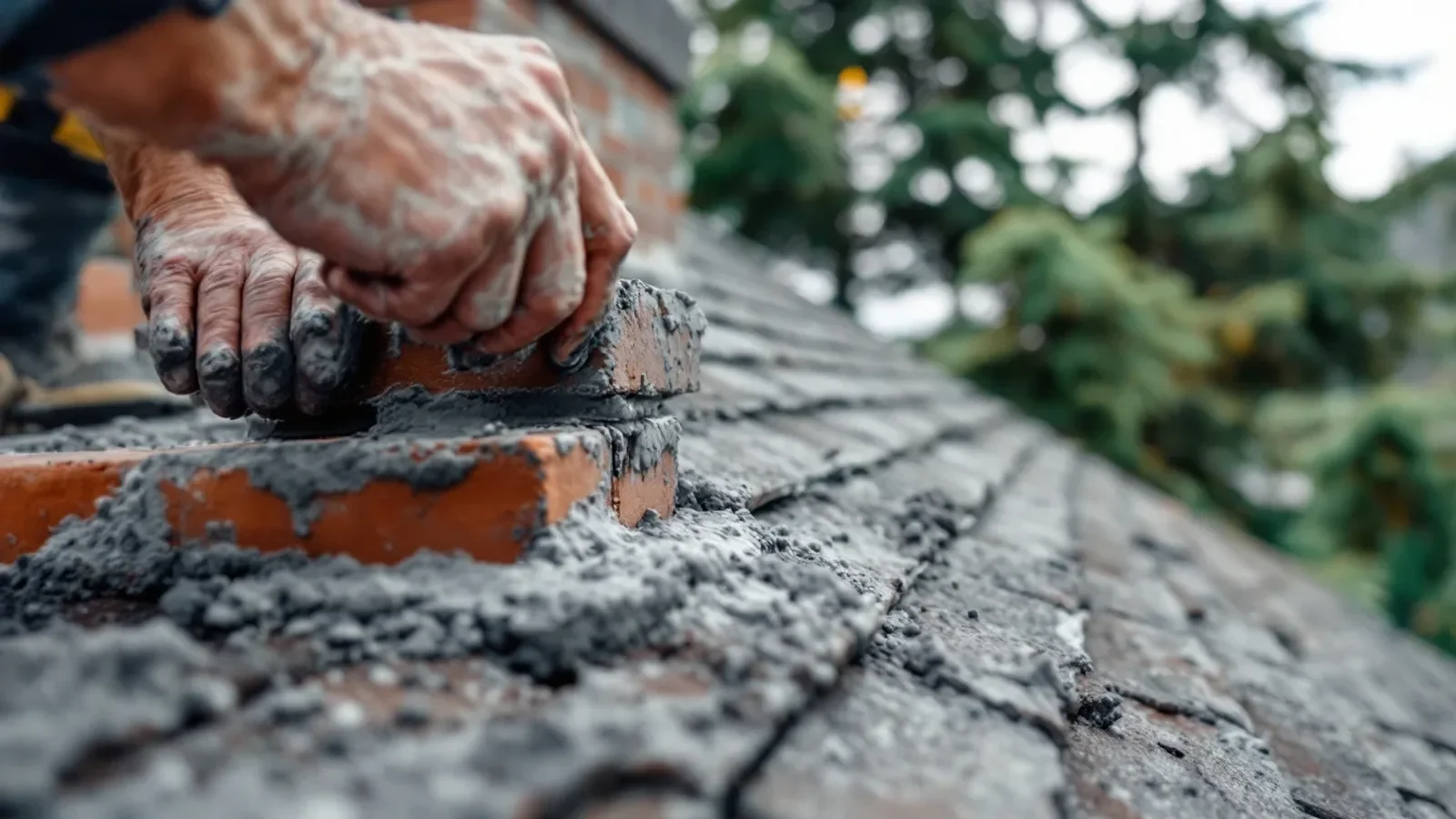
Spalling is a severe form of masonry degradation where the outer face of the brick chips, flakes, or peels away entirely. This process occurs when water trapped within the brick freezes, expands, and breaks the physical bond holding the clay particles together. Once the hard outer crust of a brick pops off, the softer, highly porous inner core is exposed to the elements, speeding up the rate of water absorption and subsequent decay.
If you want it handled correctly the first time, consider professional chimney repair in Seattle.
If you notice red brick dust, small shards of clay, or entire chunks of brick scattered on your roof or in your yard near the base of the chimney, you are looking at active spalling. This is a clear sign that the physical structure of your chimney is failing. To understand the exact mechanics behind this destructive cycle and how to address it, homeowners can read about seattle brick chimney spalling causes to prevent further structural loss.
How Can You Identify Water Damage Inside Your Fireplace Hearth?
You do not always have to climb onto your roof to know your chimney is taking on water. Often, the most telling signs are visible right inside your living room. When moisture makes its way down the flue or penetrates the exterior masonry wall, it eventually shows up in and around the firebox.
Look closely at the back wall of your fireplace for any signs of rusting on the metal damper, grate, or fireplace doors. Water mixing with ash creates a highly corrosive environment that rapidly rusts steel and cast iron components. Additionally, look for dripping water or water pooling on the hearth floor after a heavy downpour. If you have a brick firebox, look for soft, crumbling mortar joints between the firebricks, or white mineral deposits coating the interior walls. Damp, musty odors emanating from the fireplace during warm or humid days are also a classic sign of hidden water retention behind the hearth walls.
What Role Does the Chimney Crown Play in Preventing Water Intrusion?
The chimney crown is the concrete slab that caps off the very top of your chimney stack, sealing the masonry walls from direct overhead rainfall. It is designed with a slight slope to shed water away from the flue and over the edges of the brickwork. Because the crown is constantly exposed to direct sunlight, wind, and rain, it is often the first component to crack and fail.
When cracks form in the concrete crown, gravity pulls rainwater straight down into those gaps. This water bypasses the protective outer brickwork and travels down into the center of your chimney structure, soaking the flue liners and the interior masonry. During your seasonal home maintenance checks, look up at your chimney cap; if you see visible fissures, gaps, or chunks of concrete missing from the edges, your chimney crown is no longer shedding water and is actively funneled moisture into your home.
How Do Damaged Chimney Flashings Lead to Hidden Ceiling Leaks?
Chimney flashing is the sheet metal transition piece that seals the gap where your chimney stack pierces through your roofline. Because chimneys and roof structures settle and shift at slightly different rates, this joint must remain watertight yet flexible. Flashing typically consists of two layers: the step flashing woven into the shingles, and the counter-flashing embedded into the mortar joints of the chimney bricks.
Many Seattle homeowners rely on expert chimney repair in Seattle for exactly this.
When the caulking or mortar sealing the counter-flashing deteriorates, or when the metal itself rusts, a clear path is opened for rainwater to seep behind the flashing. This water runs directly down the chimney brickwork and onto your attic floor, ceiling joists, and drywall. If you notice water stains, peeling paint, or mold growth on the ceiling or walls directly adjacent to your fireplace breast, a failing flashing system is almost always the culprit. This type of water intrusion can cause severe rot in your roof decking before any dampness is ever seen inside your living room.
How Does Local Seattle Architecture and Building Age Affect Chimney Vulnerability?
The neighborhood you live in within the Seattle metro area plays a major role in how vulnerable your chimney is to water damage. Classic neighborhoods like Capitol Hill, Queen Anne, and Ballard feature a high concentration of historic craftsman, Tudor, and mid-century homes. Many of these chimneys were built using historic lime-based mortar, which is softer and more breathable than modern Portland cement formulations. While lime mortar is excellent for accommodating the natural shifting of older homes, it is highly susceptible to erosion from decades of continuous rainfall and acidic urban air.
Furthermore, many older chimneys in the Pacific Northwest were constructed without an internal flue liner, or with clay tile liners that have cracked and shifted over the years. When a chimney lacks a functional liner, acidic combustion byproducts from wood or gas fires mix with moisture from the air, creating a corrosive condensation that eats away at the interior mortar joints from the inside out. Understanding these regional architectural quirks is vital when selecting a professional who understands historic masonry care. For guidance on finding the right expert for these sensitive systems, you can review our guide on how to choose a Seattle masonry contractor for historic homes.
What Should You Do If You Spot Signs of Chimney Water Damage?
If you identify any of the warning signs described above, taking swift action can save you from extensive structural reconstruction. Ignoring minor leaks or crumbling mortar allows moisture to penetrate deeper into the chimney core, eventually compromising its structural stability and creating draft issues or fire hazards.
The first step is always to have a professional technician perform a comprehensive visual and physical diagnostic of your entire chimney system, from the crawl space or basement up to the crown. A qualified expert can pressure-test the flue, check the integrity of the flashing, and determine whether simple maintenance like sealing or spot-pointing will suffice, or if more extensive repairs are required to keep your home safe and dry. For a comprehensive overview of the repair process, check out our chimney repair services to see how professional restoration protects your investment.
Staying ahead of the wet Pacific Northwest weather is a continuous process for local homeowners. By keeping a close eye on your brickwork, chimney cap, and fireplace hearth, you can catch water damage early and keep your masonry strong for decades to come. If you suspect your chimney has suffered from seasonal water intrusion, contact the experienced team at Nation Wide Chimney Sweep&Repair today to schedule a detailed evaluation of your home’s masonry.