Fireplace Maintenance Tips for Seattle Homeowners After a Professional Cleaning
You catch a faint whiff of something musty from the hearth on the first cool October morning, flip open the damper, and realize the fireside season is back. If your Seattle home just had a professional chimney sweep, that smell should be gone and your flue should be clear. Now the question is: how do you keep it that way until next season? This quick-reference checklist covers everything you need to do between professional visits.
Immediately After Your Chimney Cleaning: First-Use Checklist
- Confirm the technician’s written inspection summary is stored somewhere accessible, such as a kitchen drawer or a home-maintenance folder.
- Check that the damper opens and closes smoothly before lighting the first fire of the season.
- Verify the firebox floor is clear of debris, ash from the prior season, and any tools or accessories left by the crew.
- Inspect the area around the hearth for any dust or soot the cleaning may have disturbed, and wipe down the surround with a dry cloth.
- Open a window slightly in the room for the first burn to help equalize air pressure and encourage a strong upward draft.
- Start with a small, test fire using two or three dry pieces of kindling to confirm the draw is working correctly before building a full fire.
- Watch the smoke: it should rise straight up and into the firebox opening, not billow into the room.
Safe Burning Habits That Protect a Clean Flue
- Burn only seasoned hardwood with a moisture content below about 20 percent; wet or green wood produces far more creosote and smoke.
- Split logs to a manageable size so they ignite quickly and burn at a higher temperature, which reduces incomplete combustion.
- Avoid burning cardboard, treated lumber, pallets, garbage, or glossy paper, all of which deposit residue and can release harmful gases.
- Never use a fireplace as an incinerator for household waste, even in small amounts.
- Keep fires moderate in size rather than stacking the firebox to the maximum; a hot, oxygen-rich fire burns cleaner than a smoldering one.
- Open the damper fully before lighting and leave it open until all embers are completely cold, not just when the active flames die down.
- Use a fireplace grate to elevate logs off the firebox floor, which improves airflow beneath the fire and supports a cleaner burn.
- Learn more about why fuel choice matters so much by reading how creosote accumulates in Seattle chimneys.
Monthly In-Season Maintenance Checklist
If you want it handled correctly the first time, consider professional chimney cleaning in Seattle.
- Shine a flashlight up into the firebox opening and look for any visible soot streaks, flaking deposits, or dark glazing on the lower flue walls.
- Check the damper plate for warping, rust, or any difficulty operating the handle; a stiff damper often signals early corrosion.
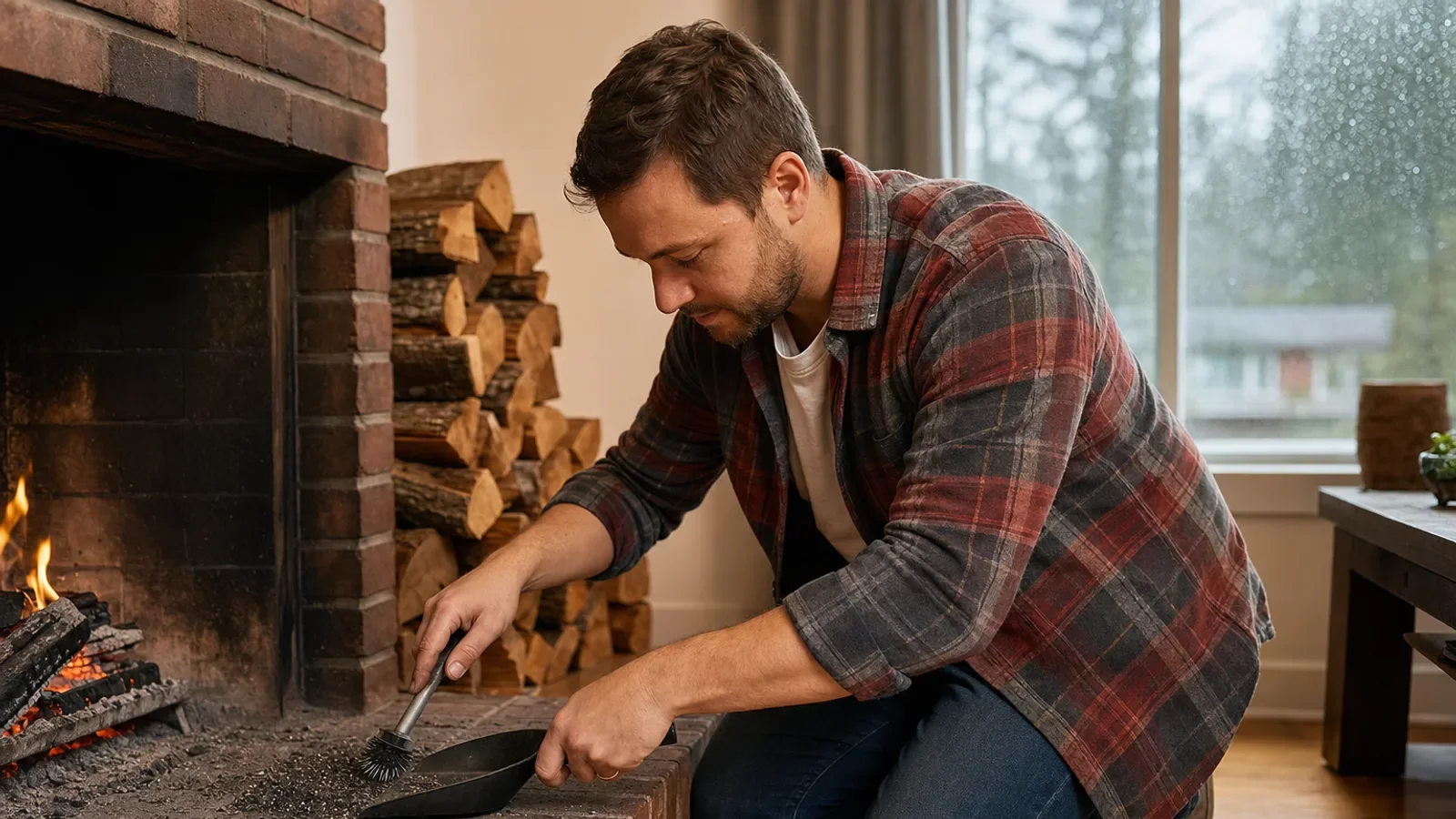
- Remove ash once it accumulates to about an inch deep, leaving a thin layer on the firebox floor to act as insulation for future fires.
- Inspect the firebox walls (the refractory panels or brick interior) for new cracks, spalling, or crumbling mortar joints.
- Look at the area around the cleanout door at the base of the chimney, if your system has one, for any ash or debris that has fallen through.
- Check the hearth extension and surrounding flooring for any embers or scorch marks that suggest sparks are escaping the firebox.
- Confirm your carbon monoxide detector and smoke alarm are functioning; test both with the button test monthly.
Seattle-Specific Considerations for Fireplace Upkeep
Seattle’s climate creates maintenance challenges that homeowners in drier regions simply do not face. The combination of persistent rain, mild but damp winters, and the region’s older housing stock means a freshly cleaned flue can develop new issues faster than you might expect.
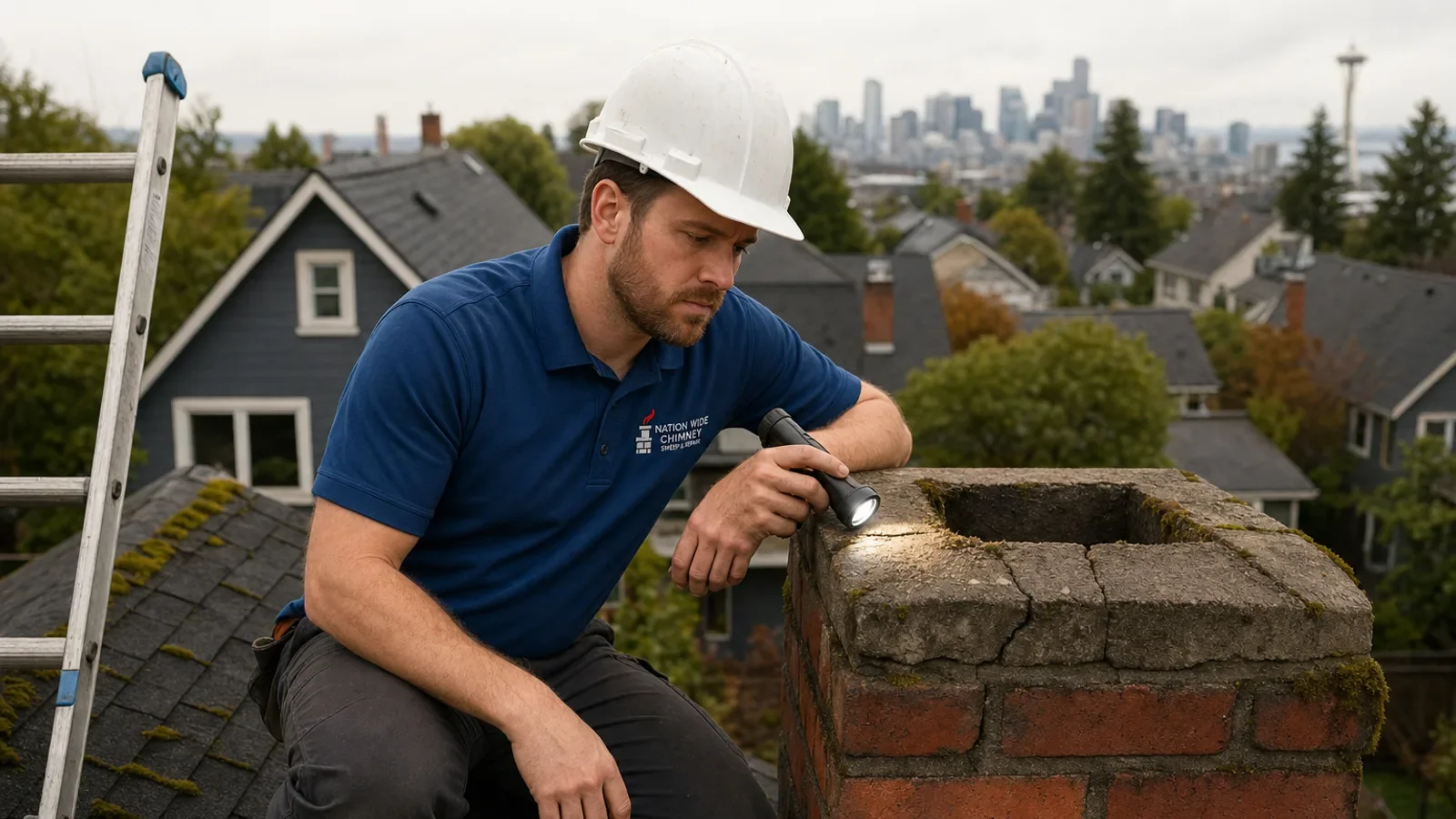
- Watch for efflorescence (white mineral staining) on exterior brick or masonry after heavy rain events; it signals water is moving through the chimney structure and could eventually reach the flue interior.
- After any windstorm, check the chimney cap from the ground with binoculars to confirm it has not shifted, cracked, or blown off; Seattle’s fall and winter windstorms are frequent enough that this is a real seasonal risk.
- Inspect the area where the chimney meets the roofline for any lifted or missing flashing; Seattle’s freeze-thaw cycles in late fall and early spring work metal flashing loose over time.
- Many Seattle homes built before the 1970s have unlined masonry chimneys or older terra-cotta tile liners that may already show wear; if your inspection report flagged any liner cracks, monitor them between appointments and schedule repairs before they worsen through a wet winter. For an idea of what those repairs involve, see what drives chimney repair costs in Seattle.
- Homes near Puget Sound or Lake Washington experience higher ambient humidity year-round; if you notice a persistent musty or smoky odor even when the fireplace is not in use, that is often a sign moisture is entering the flue, not just residual cleaning smell.
- Seattle’s frequent overcast days mean chimneys that pass through unheated attic spaces can develop condensation inside the flue on cold mornings; this is a driver of accelerated creosote hardening even at moderate use levels.
- If your home uses a gas insert or wood-burning insert installed into an older masonry fireplace, confirm annually that the liner sleeve sized for that appliance is still properly sealed at the top and bottom; Seattle’s wet winters can degrade sealant materials over a single season.
Many Seattle homeowners rely on expert chimney cleaning in Seattle for exactly this.
Signs Something Has Changed Since Your Last Cleaning
- Smoke entering the room during normal operation, especially if this did not happen at the start of the season.
- A sharp, acrid, or tar-like smell from the fireplace when it is not in use, which often points to moisture mixing with residual creosote deposits.
- Visible dark staining on the exterior of the chimney above the roofline, particularly around the mortar joints or crown.
- A damper that has become harder to operate or no longer seals fully when closed.
- Any new cracks in the firebox interior, especially horizontal cracks across refractory panels, which can indicate thermal stress.
- Rust staining inside the firebox or on the damper plate, which suggests water is getting in somewhere above.
- A noticeable drop in draft performance, meaning fires are harder to start or smoke lingers longer than before.
- If you notice any of these warning signs, review the signs your Seattle chimney may be leaking before the problem reaches the point of structural damage.
End-of-Season Shutdown Checklist
- Burn the last fire of the season with well-seasoned wood and allow the firebox to cool completely before doing anything else.
- Remove all remaining ash once the firebox is fully cold; ash left over summer can absorb moisture and become corrosive to the firebox floor.
- Close the damper firmly to prevent birds, insects, and rain from entering during the off-season.
- Place a breathable (not plastic) cover over the fireplace opening if the home will be unoccupied for extended periods, to reduce drafts without trapping moisture.
- Note any issues you observed during the season in writing so you can report them accurately when you schedule your next appointment.
- Schedule your next professional chimney cleaning before the fall rush, typically in late summer or early September, so your flue is ready when Seattle’s rainy season arrives.
- For a full breakdown of what happens during that appointment and what the technician checks, see what to expect during a professional chimney sweep in Seattle.
Frequently Asked Questions
Ready for the next step? Learn how chimney cleaning services in Seattle can help and reach out to the team.
How soon after a professional cleaning can I use my fireplace?
In most cases you can use the fireplace the same day, once the technician has confirmed the work is complete and the firebox has been cleared of any debris from the cleaning process. Starting with a small test fire is a good habit to confirm the draft is performing correctly before building a full fire.
How much ash should I leave in the firebox between fires?
A thin bed of ash, roughly half an inch to an inch deep, actually helps insulate the firebox floor and makes it easier to start the next fire. Once the ash layer exceeds about an inch, remove the excess using a metal ash bucket with a tight-fitting lid, and allow it to cool completely before disposal.
When does a Seattle fireplace need professional attention between annual cleanings?
Any time you notice smoke entering the room, a new crack in the firebox, a damper that no longer seals, or a persistent smell when the fireplace is not in use, those are reasons to call a professional rather than wait for the next scheduled appointment. Seattle’s wet winters can turn a small issue into a larger repair quickly if it is left unaddressed through a full rainy season.
A clean flue is only as good as the habits that follow it. Keeping a simple seasonal checklist, burning the right fuel, and staying alert to changes in how your fireplace performs are the most reliable ways to extend the value of a professional cleaning through a full Seattle winter. When it is time to book your next appointment, schedule your chimney sweep with Nation Wide Chimney Sweep and Repair.