Understanding Chimney Repair Cost Factors in Seattle
A chimney that goes uncleaned through Seattle’s long wet season rarely stays a minor problem. Moisture seeps into hairline cracks, freeze-thaw cycles widen them, and creosote quietly builds toward a dangerous threshold, all before a homeowner notices anything wrong. By the time the damage becomes visible, the repair scope has often grown from a simple fix into a multi-stage masonry or flue restoration project. For Seattle homeowners, understanding what drives those repair costs, and how routine maintenance reduces them, is the most practical way to protect both the chimney and the household budget.
This guide walks through each factor that influences what a chimney restoration project involves in the Pacific Northwest, from the age of the masonry to the specific moisture challenges of the Puget Sound climate. If you want to understand the full service visit before any of this becomes necessary, our complete guide to professional chimney sweeps in Seattle covers exactly what to expect from start to finish.
Before You Start: What Shapes Repair Scope in Seattle
- Age and construction type of the chimney, older brick-and-mortar stacks common in Seattle’s Craftsman and mid-century homes behave differently than newer prefabricated systems.
- How long since the last professional cleaning or inspection, deferred maintenance almost always expands the repair list.
- Visible symptoms, spalling bricks, white efflorescence staining, a cracked crown, water in the firebox, or smoky backdraft are each diagnostic signals pointing to different repair types.
- Access to the chimney stack, roofline pitch, height, and surrounding tree cover all affect how a crew can safely work.
- Whether a Level II inspection has been completed, without a proper inspection, repair estimates are guesswork.
Step 1: Start With a Proper Chimney Inspection
No repair estimate in Seattle is reliable without a thorough inspection first. A Level I inspection covers the accessible portions of the firebox, smoke chamber, and exterior crown during a standard cleaning visit. A Level II inspection goes further, using camera equipment to examine the flue liner from the inside. In Seattle, where older clay tile liners are common and moisture intrusion is a persistent issue, that interior view often reveals damage that exterior observation alone would miss entirely. Cracks in the flue liner, deteriorated mortar joints between tiles, and partial obstructions from debris or animal nesting all affect the repair scope and cannot be estimated accurately from the outside. Scheduling an inspection before any other work is the single step that prevents surprise cost escalation mid-project.
Step 2: Identify the Specific Repair Type Needed
Chimney repairs in Seattle fall into several distinct categories, and each carries a different scope of work. Understanding which type applies to your chimney helps set realistic expectations.
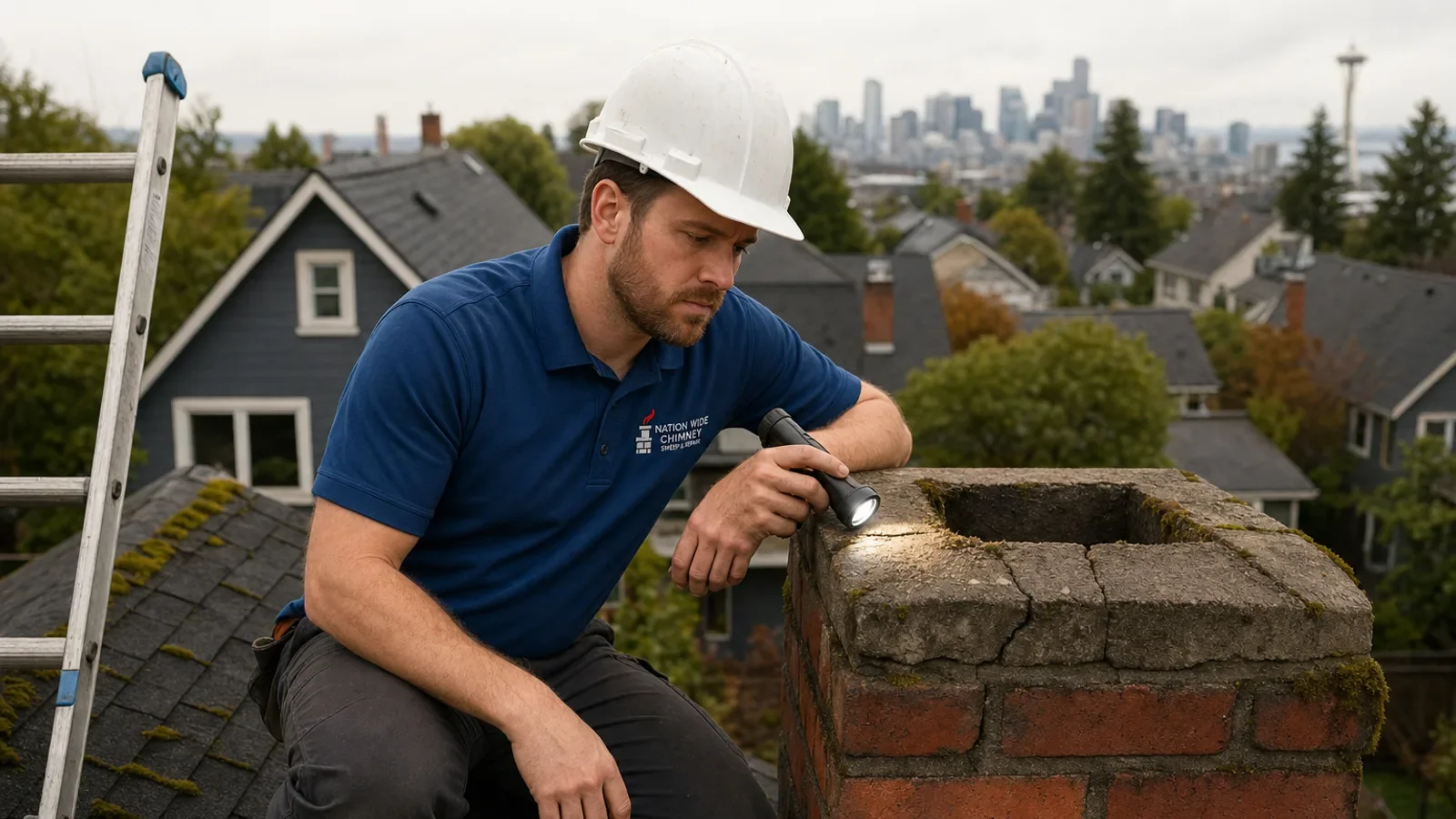
- Crown repair or replacement, the concrete or mortar cap at the top of the stack is the first line of defense against Seattle’s rainfall. A cracked crown allows water to funnel directly into the masonry. Repairs range from sealant application on minor cracks to full crown rebuilding when the damage is structural.
- Flue liner repair or relining, cracked clay tile liners are among the most common findings in Seattle’s older homes. Depending on the extent of the damage, options include applying a brushed-on liner system, installing a stainless steel liner, or repairing individual tile sections. Each approach has a different labor and material profile.
- Tuckpointing and mortar joint repointing, Seattle’s wet winters accelerate mortar erosion between bricks. Tuckpointing removes deteriorated mortar and packs in fresh material. The scope depends on how many linear feet of joints need attention and how deeply the erosion has progressed.
- Chimney leak repair, water intrusion can originate from the crown, the flashing at the roofline, deteriorated mortar, or a missing or damaged cap. Diagnosing the actual entry point before applying a fix is essential; treating one source while another remains open produces repeat repairs. Our guide to spotting chimney leaks in Seattle can help you identify where moisture may be entering before a technician visits.
- Chimney cap installation or replacement, a missing or damaged cap is one of the least expensive repairs but one of the most consequential when ignored, since it allows rain, debris, and animals direct access to the flue.
- Firebox repair, cracked firebricks or deteriorated refractory mortar inside the firebox need attention before the fireplace is used, since damaged firebox walls can allow heat to transfer into combustible framing.
Step 3: Factor In Seattle’s Specific Climate and Housing Stock
If you want it handled correctly the first time, consider professional chimney cleaning in Seattle.
Seattle’s repair landscape is shaped by conditions that differ meaningfully from drier climates. Annual rainfall in the city averages around 37 to 38 inches, and the majority of that moisture arrives between October and March, precisely when fireplaces are in heaviest use. That timing creates a cycle where chimneys are wet from rain, then heated repeatedly during use, accelerating the expansion and contraction that cracks mortar and tile.
The city’s housing stock adds another layer. Neighborhoods like Capitol Hill, Wallingford, Ballard, and the Central District are dense with homes built between the 1910s and 1950s. These properties commonly feature original brick chimneys with clay tile flue liners that are now 70 to 100 years old. Clay tile in that age range is not automatically failing, but it warrants closer inspection because even small cracks in aging tile can widen quickly once moisture infiltration begins. Prefabricated metal fireplaces installed in Seattle homes from the 1970s onward have their own set of age-related concerns, including panel degradation and connector wear. The repair approach and the materials involved differ substantially between these two construction types, which is one reason a one-size estimate without an inspection rarely reflects actual conditions.
Step 4: Understand How Creosote Buildup Connects to Repair Costs
Creosote is not just a cleaning concern. Heavy third-degree creosote deposits, the glazed, tar-like accumulation that forms with slow, smoky fires, can damage the flue liner itself. When a chimney fire occurs, even a small one that a homeowner may not notice, the intense heat can crack clay tiles or warp metal components. Discovering this damage during a post-cleaning inspection is common, and the subsequent liner repair is directly traceable to the buildup that allowed the chimney fire to occur in the first place. Keeping creosote at manageable levels through regular cleaning is the most direct way to prevent this category of repair. For a deeper look at how buildup develops, our breakdown of creosote causes in Seattle explains the specific burning habits and wood choices that accelerate the problem.
Step 5: Assess Flashing and Exterior Masonry Conditions
Flashing, the metal seal where the chimney meets the roofline, is a frequent source of water intrusion in Seattle. It can fail through corrosion, improper original installation, or simply through the movement that occurs as a home settles over decades. When flashing fails, water tracks down behind the chimney and into the attic or wall cavities, and the resulting damage is often misattributed to a roof problem rather than the chimney. A chimney technician evaluating the exterior will check the flashing condition alongside the crown, the cap, and the visible mortar joints. Addressing flashing issues early, before they contribute to interior water damage, keeps the repair limited to the chimney system itself rather than expanding into adjacent building components.
Exterior brick spalling, where the face of a brick breaks away, is another Seattle-specific concern. It occurs when water absorbed into the brick freezes and expands. Seattle does not have severe winters, but temperatures do dip below freezing enough times each season to drive this process in already-saturated masonry. Spalled bricks need replacement rather than patching, and the extent of spalling across the stack determines how involved that work becomes.
Step 6: Get Repair Estimates After, Not Before, the Inspection
A common source of frustration for Seattle homeowners is receiving a phone estimate that changes significantly once a technician actually examines the chimney. This happens because chimney condition varies so widely that meaningful scoping requires direct observation. The right sequence is: schedule a cleaning and inspection first, review the technician’s written findings, then discuss repair options based on what was actually found. This approach also gives you a documented baseline, useful if you are buying or selling a home, refinancing, or simply want a record of the chimney’s condition over time.
Many Seattle homeowners rely on expert chimney cleaning in Seattle for exactly this.
When comparing repair proposals, look at whether the scope includes a follow-up inspection after the work is complete, what materials are specified (stainless steel liner grades, mortar mix types, sealant products), and whether the technician can clearly explain what was found and why the proposed fix addresses it. These details reflect the quality of the diagnostic process more reliably than any single line-item figure. For a full checklist of what to look for when evaluating a chimney professional, our guide to choosing a Seattle chimney sweep covers the questions worth asking before you hire.
Step 7: Plan Preventive Maintenance to Reduce Future Repair Frequency
The most consistent pattern in chimney repair history is that deferred maintenance compounds. A minor crown crack that costs relatively little to seal becomes a structural rebuild if water has been entering the masonry for two or three seasons unchecked. A small flashing gap that could be resealed in an hour becomes a mold and rot issue if it routes water into wall cavities over multiple winters.
Annual cleaning and inspection, ideally scheduled in late summer or early fall before Seattle’s rainy season begins, catches these conditions while they are still in the minor-repair category. The inspection component of that annual visit is what turns routine maintenance into a cost-management tool. When a technician documents the crown condition, the liner, the mortar joints, and the flashing every year, small changes are visible year over year rather than discovered only after they have become significant problems. After any cleaning or repair visit, following a consistent maintenance routine helps extend the time between major service needs. Post-cleaning fireplace maintenance for Seattle homes outlines the specific steps that keep a freshly serviced chimney in good shape through the heating season.
When to Call a Professional in Seattle
Some chimney conditions are clear signals to stop using the fireplace and call a professional before the next fire:
- Visible cracks in the firebox walls or visible daylight through the flue when viewed from below
- Water appearing in the firebox after rain, or water stains on the ceiling or walls near the chimney
- A strong odor from the fireplace when it has not been used, which can indicate heavy creosote or moisture-related decay
- Smoke entering the room rather than drawing up the flue
- Bricks or mortar pieces falling into the firebox
- Any evidence of a previous chimney fire, including a strong burnt smell, distorted metal components, or cracked tiles visible from the firebox opening
None of these conditions should be evaluated by a homeowner attempting to work inside the flue. Flue liner assessment, crown inspection, and flashing evaluation all require professional equipment and safe roof access. A licensed chimney sweep can assess these conditions during a standard service visit and provide a written report of findings. For a full picture of what that visit involves, see our professional chimney sweep guide for Seattle homeowners.
Ready for the next step? Learn how chimney cleaning services in Seattle can help and reach out to the team.
Frequently Asked Questions
Does a chimney inspection always lead to repair recommendations?
Not necessarily. Many Seattle chimneys that receive regular annual cleaning and inspection come through with no repair needs beyond the cleaning itself. The inspection is designed to catch developing issues early, and a clean bill of health is a common outcome for well-maintained systems. When repairs are recommended, the inspection report should describe what was found and why the repair is warranted.
How does Seattle’s rainfall specifically affect chimney repair needs compared to drier climates?
Water is the primary driver of chimney deterioration, so Seattle’s extended wet season creates more frequent moisture-related repair needs than homeowners in drier regions typically encounter. Crown cracking, mortar erosion, flashing failure, and flue liner damage from freeze-thaw cycling are all more common here than in climates with lower annual precipitation. This makes annual inspection more valuable in the Pacific Northwest than it might be elsewhere.
Can I use my fireplace while waiting for a repair appointment?
It depends on what was found during the inspection. Minor cosmetic issues or early-stage mortar erosion may not require stopping fireplace use immediately, but a cracked flue liner, damaged firebox walls, or any sign of a previous chimney fire are conditions that warrant suspending use until repairs are complete. A qualified technician should advise you specifically based on the findings in your chimney.
How often should Seattle homeowners schedule chimney cleaning to avoid major repairs?
Annual cleaning and inspection is the standard recommendation for any chimney in regular use. In Seattle, scheduling that visit in late summer before the October-through-March heating season means the chimney enters its heaviest use period in known, documented condition. Homes that burn wood more than two or three times per week during the season may benefit from a mid-season check as well.
What is the difference between tuckpointing and full chimney rebuilding?
Tuckpointing addresses deteriorated mortar joints while the bricks themselves remain structurally sound. The old mortar is removed to a safe depth and replaced with fresh material. Full or partial rebuilding is necessary when the bricks themselves are spalled, cracked, or structurally compromised, or when the mortar erosion has progressed so far that the stack has lost structural integrity. An inspection determines which condition applies.
The Straightforward Path to Avoiding Large Repair Bills
Seattle chimneys face a genuine moisture challenge that makes consistent maintenance more than a general recommendation. It is the practical mechanism that keeps minor seasonal wear from accumulating into a major restoration project. Understanding the factors that drive repair scope, from the age of your masonry to the specific condition of the flue liner and crown, puts you in a position to make informed decisions rather than react to surprises.
Nation Wide Chimney Sweep and Repair serves Seattle homeowners with cleaning, inspection, and repair services across the city and surrounding neighborhoods. If your chimney has not been inspected recently, or if you have noticed any of the warning signs described above, reaching out to schedule a visit is the most direct step toward knowing exactly where things stand.