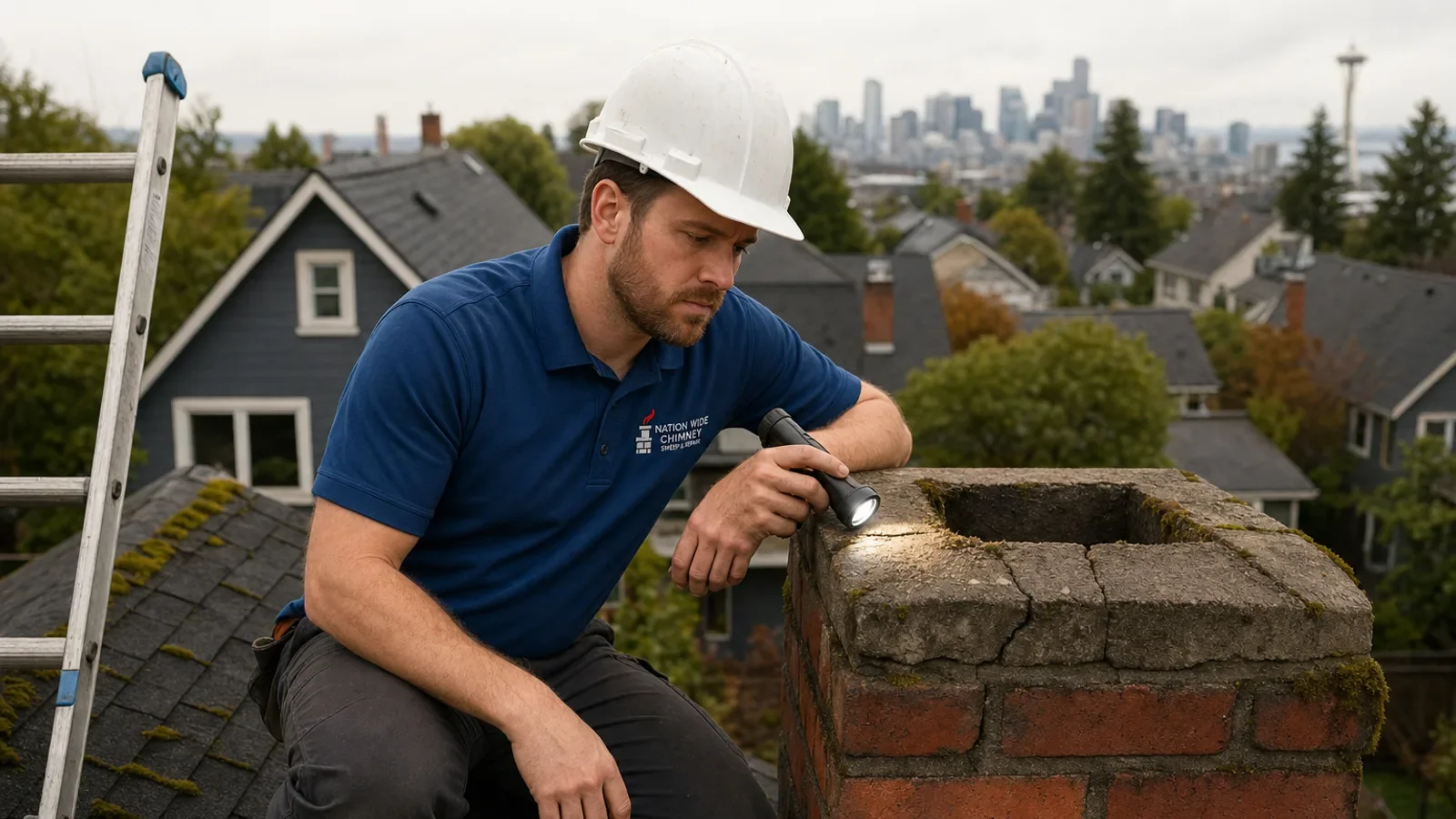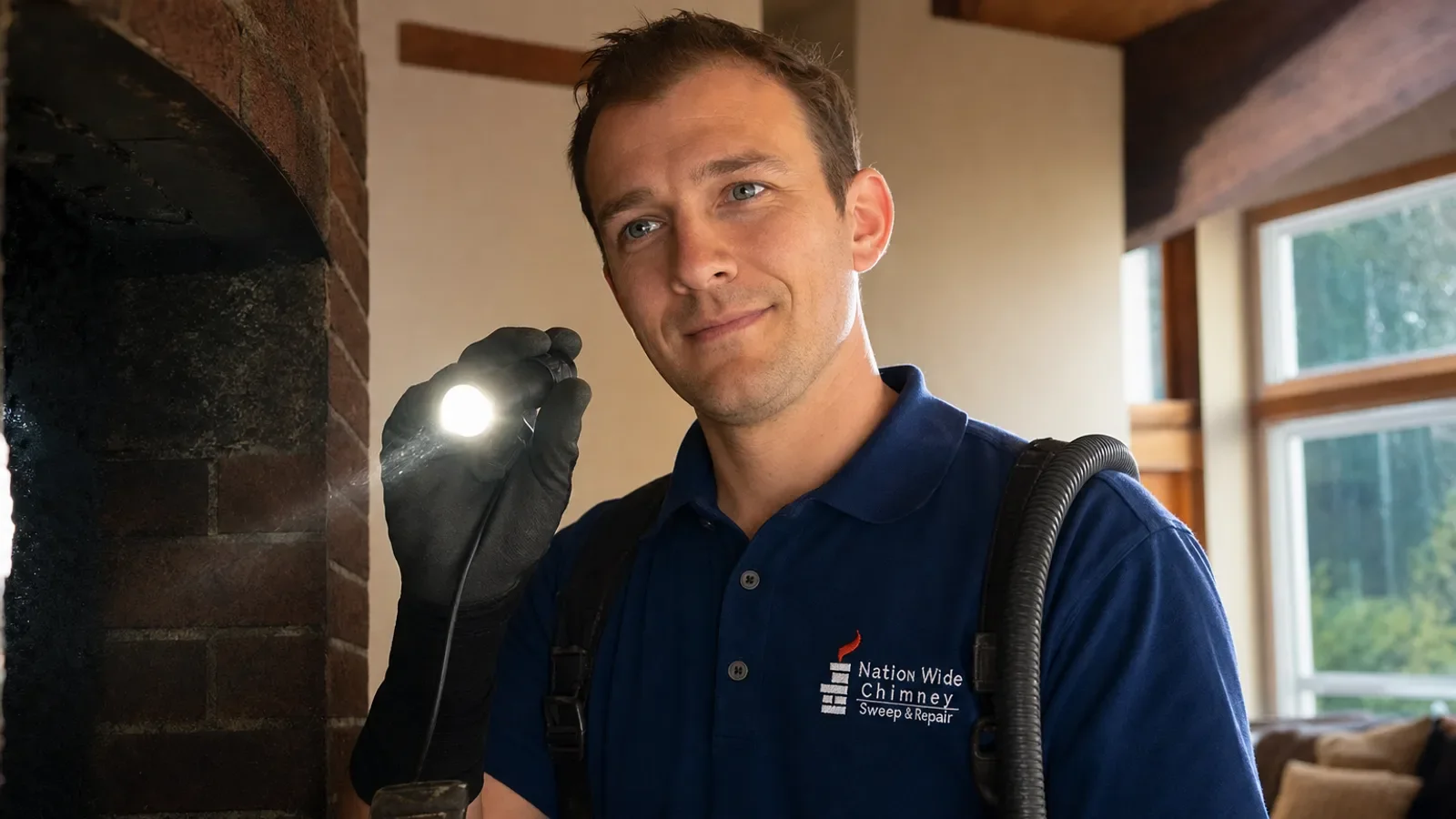
Why Rain Makes Creosote Build Up Fast in Seattle Chimneys
Creosote is responsible for the majority of residential chimney fires reported each year in the United States, and Seattle homeowners face a compounding factor most other cities don’t: persistent rain, cool temperatures, and damp wood create near-perfect conditions for rapid buildup. If you heat your home with a fireplace or wood stove in the Pacific Northwest, understanding what accelerates this hazard could be the most useful thing you read before winter.
What exactly is creosote, and where does it come from?
Creosote is a byproduct of incomplete combustion. When wood burns, it releases smoke, water vapor, gases, and unburned carbon particles. As that mixture rises through the flue and contacts the cooler chimney walls, some of it condenses and sticks. Over time, these deposits harden into creosote. It starts as a light, flaky residue but can progress through three distinct stages: a dusty coating (easy to brush away), a tar-like glaze (much harder to remove), and a thick, hardened crust that can only be addressed with specialized tools or chemical treatments. The further along the buildup, the greater the fire risk and the more labor-intensive the cleaning.
Why does Seattle’s wet climate speed this process up?
Seattle averages around 38 inches of rain annually, spread across many months rather than concentrated in a short wet season. That sustained moisture affects chimneys in two key ways. First, firewood stored outdoors or in poorly ventilated spaces absorbs moisture from the air, raising its moisture content well above the recommended level for clean burning. Wet wood smolders rather than burns hot, producing far more smoke and unburned particles per log. Second, cool, damp exterior air chills the flue liner faster, lowering the temperature at which combustion gases condense. Both factors together mean creosote deposits form more quickly and in greater volume than they would in a drier climate.
How does wet firewood specifically make the problem worse?
Wood with high moisture content requires significant energy just to evaporate that water before it can combust cleanly. The result is a cooler, slower, smokier fire. That smoke is loaded with the tar-forming compounds that become creosote when they cool on flue walls. Seasoned firewood, split and stored under cover for at least six months to a year, burns hotter and produces far less residue. In the Seattle area, where humidity rarely drops low enough to season wood quickly outdoors, many homeowners benefit from covered storage with good airflow on all sides, or from purchasing kiln-dried wood. Checking moisture content with an inexpensive meter before burning is a simple habit that meaningfully reduces buildup between professional cleanings.
If you want it handled correctly the first time, consider professional chimney cleaning in Seattle.
Does Seattle’s housing stock make chimneys more vulnerable?
Yes, and this is a detail that matters for local homeowners. A significant portion of Seattle’s residential housing was built between the 1920s and 1960s, when chimney design standards and liner requirements were very different from today’s codes. Many of these older chimneys have unlined or clay-tile-lined flues that were sized for coal or oil heating systems, not the wood-burning inserts or gas appliances commonly installed in them today. An oversized flue relative to the appliance it serves runs cooler because exhaust gases slow down and spread out, giving them more time to condense before exiting. Cooler flue temperatures mean faster creosote accumulation. If your Seattle home predates 1970 and still has its original chimney, the liner configuration is worth a professional look. See signs your chimney may have structural issues for related warning signals that often appear alongside heavy buildup in older systems.
What are the three stages of creosote, and why does the stage matter?
Stage one creosote is a loose, sooty residue that a standard rotary brush removes without difficulty during routine chimney cleaning. Stage two is a harder, tar-like deposit that has dried and partially hardened; it requires more aggressive brushing and sometimes rotary cleaning systems. Stage three is the most serious: a thick, shiny, almost glazed crust that has built up over multiple seasons. It is highly flammable, does not respond well to standard brush cleaning, and often requires chemical treatment applied before a technician can safely remove it mechanically. The longer heavy buildup goes unaddressed, the more involved and costly the remediation. Annual inspections catch the problem at stage one or early stage two, before it escalates.
Can creosote cause problems beyond fire risk?
Many Seattle homeowners rely on expert chimney cleaning in Seattle for exactly this.
Creosote buildup narrows the usable diameter of the flue, which restricts airflow and causes smoke to back-draft into the living space. Beyond the obvious unpleasantness, this means carbon monoxide and combustion gases that should exit the chimney are instead entering the home. Heavy deposits also absorb moisture from rain and condensation, then release it into the surrounding masonry as they expand and contract with temperature changes. This accelerates mortar deterioration and can lead to cracked flue tiles or spalled brickwork. In other words, ignoring creosote does not just increase fire risk; it actively degrades the chimney structure itself. For a closer look at what happens during a professional chimney sweep, including how technicians assess and address each stage of buildup, the full process overview covers the inspection and cleaning steps in detail.
How often should Seattle homeowners schedule a chimney cleaning?
The National Fire Protection Association (NFPA 211) recommends that chimneys, fireplaces, and vents be inspected at least once a year, with cleaning performed whenever deposits warrant it. For Seattle households that burn wood regularly through the long heating season, annual cleaning before the fall rains arrive is a practical baseline. Households that burn frequently, use wood with higher moisture content, or have older flue systems may find that twice-yearly service keeps buildup manageable. If you have not had the chimney serviced in more than two years, or if you notice a strong smoky odor when the fireplace is not in use, that is a signal to schedule an appointment rather than wait for the next seasonal reminder. You can also review post-cleaning maintenance steps to extend the time between professional visits.
What can homeowners do between professional visits to slow buildup?
A few consistent habits make a real difference. Burn only dry, well-seasoned hardwood or kiln-dried wood; softwoods like fir and pine are common in the Pacific Northwest but produce significantly more resin and smoke than hardwoods such as oak, maple, or alder. Keep fires burning hot rather than smoldering, since a hotter fire means more complete combustion and less residue. Avoid burning cardboard, treated lumber, or household trash, all of which introduce additional compounds that accelerate deposit formation. Check that the damper opens fully before lighting a fire, so exhaust gases move efficiently rather than lingering in the flue. These steps reduce the rate of buildup but do not replace professional cleaning; they simply help you get the most out of each annual service visit.
How do I know if creosote buildup has already become a problem in my chimney?
Ready for the next step? Learn how chimney cleaning services in Seattle can help and reach out to the team.
A few observable signs suggest buildup has progressed beyond the light-residue stage. A strong, acrid, or tar-like odor coming from the fireplace, especially on humid days or when it rains, often indicates significant deposits. Smoke that lingers in the firebox or drifts into the room rather than drawing cleanly up the flue points to restricted airflow, which buildup causes. A visible dark, oily stain around the fireplace opening or damper area can indicate tar-stage deposits releasing oils as temperatures change. If you have not had a professional inspection recently and notice any of these signs, scheduling one before your next fire is the right call. Our team at Nation Wide Chimney Sweep and Repair provides thorough inspections and professional chimney sweep services for Seattle homeowners who want a clear picture of their flue’s condition before the heating season begins.
Is there anything specific about Seattle regulations I should know?
Seattle and King County have adopted air quality rules that affect when and how residents can burn wood. During certain high-pollution periods, the Puget Sound Clean Air Agency issues burn bans that restrict or prohibit wood burning in areas served by gas or electric heat. Burning during a ban can result in a fine. These restrictions are separate from chimney safety requirements, but they are worth knowing because they affect how frequently you use your fireplace and, by extension, how quickly creosote accumulates during the months when burning is permitted. Requirements and ban schedules vary, so checking with the Puget Sound Clean Air Agency directly for current rules is the most reliable approach. A chimney that is clean and in good repair also tends to burn more efficiently, which is a practical advantage when burn windows are limited.
Ready to get ahead of creosote before the Seattle rains arrive?
Creosote buildup is one of those problems that compounds quietly until it becomes urgent. Seattle’s climate, older housing stock, and long heating season create conditions where annual professional attention is not just a recommendation, it is a straightforward way to protect the home and the people in it. Nation Wide Chimney Sweep and Repair serves Seattle homeowners with inspections and cleaning that address buildup at every stage. If you want to understand more about what to look for when selecting a chimney professional, that resource walks through the key questions to ask. When you are ready to schedule, reach out to our team directly, and we will help you get the fireplace in safe, clean shape before the season demands it.