7 Signs Your Seattle Chimney Is Leaking Water (And What to Do Next)
Is water getting into your chimney? That question sends a lot of Seattle homeowners searching every fall, and the short answer is: if you are asking, there is a good chance something needs attention. Seattle’s persistent rain, marine air, and freeze-thaw cycles put chimneys under stress that drier climates simply do not. This guide walks through seven concrete warning signs of water infiltration so you can catch a small problem before it becomes a costly repair, and understand exactly when to call a professional for a chimney sweep and inspection.
1. White Staining (Efflorescence) on the Exterior Masonry
Those chalky white streaks on the outside of a brick chimney are efflorescence, a mineral deposit left behind when water moves through masonry and evaporates on the surface. The staining itself is not structural damage, but it is a reliable indicator that water is repeatedly soaking into the brickwork. In Seattle, where rain can fall for weeks without a real dry-out, efflorescence tends to appear on the north and west faces of chimneys that take the brunt of prevailing weather. If you see it, the masonry is absorbing more moisture than it should, and the mortar joints are worth inspecting closely. Left unaddressed, repeated saturation accelerates mortar erosion and can lead to spalling brick, especially during the occasional hard freeze the Puget Sound region does experience.
2. Rust Stains Inside the Firebox or on the Damper
Open the firebox and take a look at the damper plate and the firebox walls. Orange-brown rust staining is a clear sign that water is reaching metal components inside the flue system. Dampers are designed to seal the flue when the fireplace is not in use, but a water-damaged damper may warp, corrode, and lose its ability to close properly. A damper that will not seal tightly lets cold, damp Seattle air pour into the living space and allows rain to drip straight down into the firebox. Rust streaks on the firebox floor or back wall often indicate a chronic drip rather than a one-time event, which points to a structural issue at the top of the chimney rather than a splash from a single heavy storm.
3. Deteriorating Mortar Joints Between Bricks
If you want it handled correctly the first time, consider professional chimney cleaning in Seattle.
Mortar is porous by design, but it is meant to cure and harden into a durable seal. Years of Seattle rainfall gradually wash calcium out of the mortar, leaving it soft, crumbly, or recessed. Run your finger along the joints between bricks on an accessible section of the chimney exterior. If mortar crumbles away or you can press a fingernail into it, the joints need repointing. Deteriorated mortar allows water to migrate directly into the chimney core, bypassing the brick face entirely. This is one of the most common leaking chimney signs in the Pacific Northwest because the region rarely gets the sustained dry heat that allows masonry to fully cure and harden each year. A professional inspection can assess how deep the deterioration runs and whether repointing is sufficient or whether more extensive chimney repair is needed. See what affects repair pricing in Seattle for a sense of how scope influences the work involved.
4. A Cracked or Missing Chimney Crown
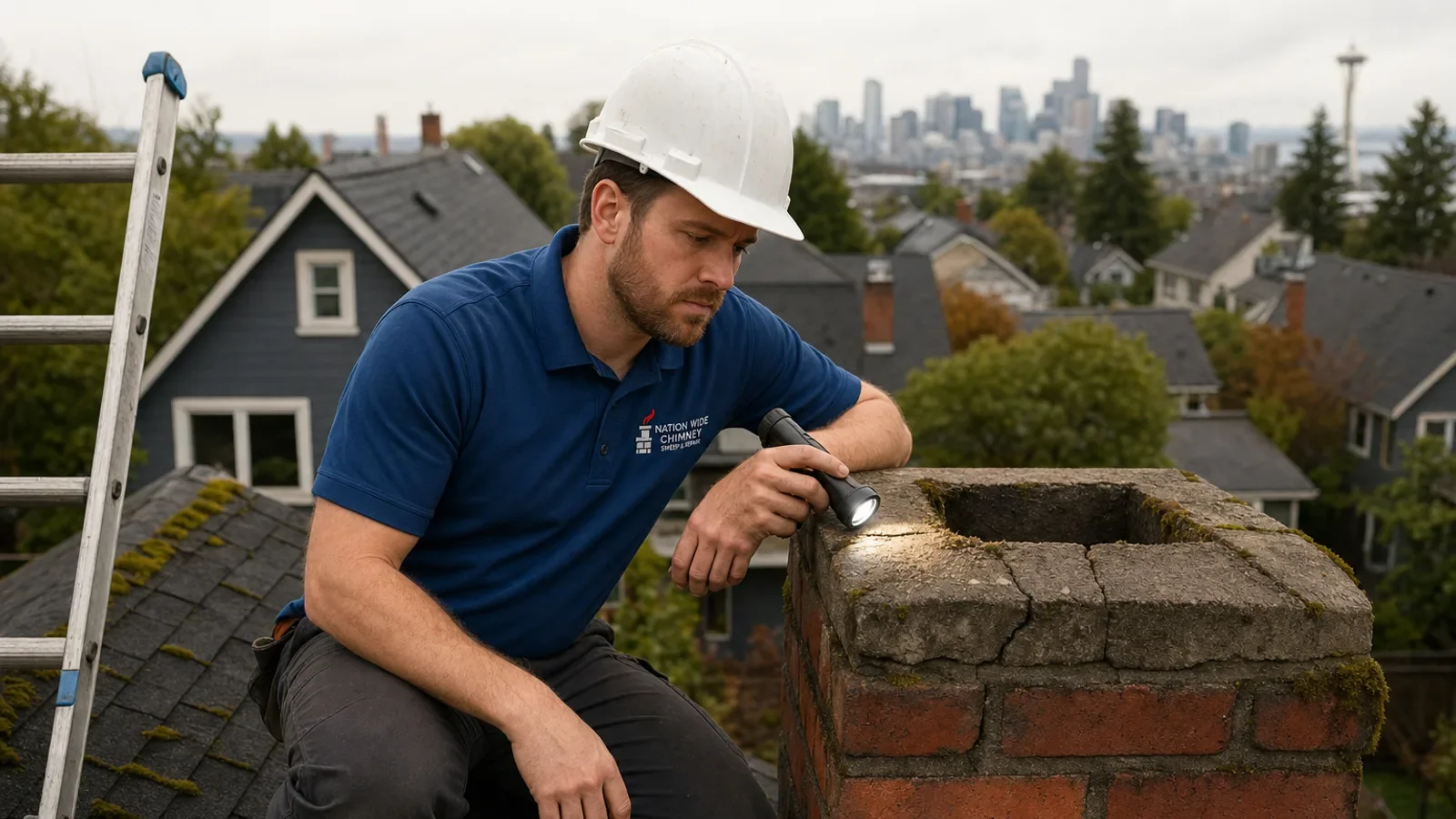
The chimney crown is the concrete or mortar cap that covers the top of the chimney structure, surrounding the flue liner opening. Its job is to shed water away from the chimney and prevent rain from running down between the flue liner and the chimney walls. Crowns crack for several reasons: poor original construction, thermal expansion and contraction, and the weight of moss or debris accumulation. In Seattle, crowns are also vulnerable to biological growth because the damp, shaded environment encourages moss and lichen, which hold moisture against the concrete surface and accelerate cracking. A cracked crown can allow significant volumes of rain to enter the chase during even a moderate storm. If you can safely see the top of your chimney from a window or with binoculars, look for visible cracks, chips, or sections where the crown has separated from the flue tile.
5. Water Sounds, Dripping, or Staining Inside the Flue
During a heavy rain event, stand near the fireplace and listen. An occasional drip is not always alarming if the damper is open, but a steady dripping sound with the damper closed points to a compromised seal somewhere above. Shining a flashlight up into the firebox opening may reveal water staining on the flue tile, dark mineral deposits, or even standing water on the smoke shelf (the ledge just above the damper). The smoke shelf collects debris and can also collect water, which then spills into the firebox when it overflows. This is a spot that a professional chimney cleaning addresses directly, clearing the smoke shelf of accumulated leaves, twigs, and soot that trap moisture. For context on how debris and moisture interact inside the flue, the article on what causes creosote buildup in Seattle chimneys covers how wet wood and incomplete combustion compound the problem.
6. Seattle-Specific: Moss, Lichen, and Biological Growth on the Stack
Many Seattle homeowners rely on expert chimney cleaning in Seattle for exactly this.
This sign is particularly relevant to Seattle homeowners. The combination of mild temperatures, shade from mature Douglas firs and cedars, and near-constant moisture from October through April creates ideal conditions for moss and lichen to colonize masonry chimneys. Unlike efflorescence, which is a passive mineral deposit, moss is actively destructive. Moss root systems penetrate mortar joints and brick faces, physically widening existing micro-cracks as the plant grows. Lichen produces mild acids that etch into the brick surface over time. Both organisms hold water against the masonry long after rain stops, extending the period of saturation far beyond what the masonry was designed to handle. Homeowners in neighborhoods like Ravenna, Phinney Ridge, and the Central District, where tree canopy is dense and chimneys stay shaded through the day, tend to see heavier biological growth than those in sunnier exposures. If your chimney has a green or gray-green coating, that moisture retention is likely contributing to mortar deterioration and should be addressed before the next heating season.
7. Damp Smells, Staining, or Peeling Paint Near the Fireplace
Water that enters a chimney does not always exit through the firebox opening. It can migrate laterally through the chimney structure into adjacent framing, drywall, or plaster. Homeowners often notice this as a musty odor near the fireplace, especially after a stretch of wet weather, or as yellowish-brown staining on the ceiling or wall beside the chimney. Peeling paint or bubbling wallpaper on an interior wall that shares a surface with the chimney chase is another indicator. These signs suggest water has already moved beyond the chimney itself and into the building structure, which raises the stakes considerably. At this stage, a chimney inspection is not optional, it is urgent, because moisture inside wall cavities can cause wood rot and create conditions for mold growth. Scheduling a professional chimney inspection as soon as these symptoms appear is the fastest way to understand the source and scope of the intrusion.
Frequently Asked Questions
How do I know if my chimney is leaking or if the moisture is from condensation?
Condensation inside a flue typically appears as light surface moisture on the liner tiles during cold weather and tends to be uniform. Water infiltration from a leak usually produces localized staining, dripping sounds during rain, or visible water on the smoke shelf. A camera inspection of the flue liner is the most reliable way to distinguish between the two, because it shows exactly where and how water is entering.
Ready for the next step? Learn how chimney cleaning services in Seattle can help and reach out to the team.
Can I use my fireplace if I suspect a chimney leak?
Using a fireplace with an active water problem is not advisable until a professional has assessed the situation. A compromised flue liner or cracked crown can allow combustion gases to escape into the home rather than venting safely, and water-damaged components like a warped damper may not function correctly. A brief inspection before lighting the first fire of the season is always a sound practice.
Does homeowners insurance cover chimney water damage in Seattle?
Coverage varies by policy and by the cause of the damage. Sudden, accidental water intrusion (such as a storm that dislodges a chimney cap) is more commonly covered than gradual deterioration from deferred maintenance. Requirements vary by insurer, so reviewing your specific policy and consulting your agent is the right first step rather than assuming coverage either way.
What to Do Once You Spot These Signs
Identifying one or more of these warning signs is the first step; the next is getting a qualified professional to assess the chimney before another Seattle rainy season compounds the damage. A thorough chimney sweep clears debris from the smoke shelf and flue, giving the technician a clear view of the liner condition, crown, and flashing. From there, any needed repairs, whether repointing mortar, sealing a cracked crown, or addressing flashing at the roofline, can be scoped accurately. If you are weighing which company to call, how to choose a Seattle chimney sweep outlines what credentials and process to look for. And once repairs are complete, post-cleaning fireplace maintenance in Seattle covers the simple steps that help keep water out between professional visits.
Water damage rarely announces itself dramatically. It tends to work quietly through mortar joints and hairline cracks until the repair scope is far larger than it would have been with earlier attention. If any of the seven signs above look familiar, Nation Wide Chimney Sweep & Repair is available to inspect, clean, and repair Seattle chimneys, so reach out to schedule an assessment before the rains return.