What to Expect During a Professional Chimney Sweep in Seattle
That faint smoky smell drifting through your living room on the first cold October evening is a familiar signal for Seattle homeowners: heating season is here, and the fireplace needs attention. Whether your home sits in Ballard, Beacon Hill, or Bellevue, a professional chimney sweep is the single most important step you can take before lighting that first fire of the season. This guide walks you through every stage of the process so you know exactly what to expect before the technician knocks on your door.
Why Seattle Homeowners Schedule Chimney Cleaning Every Year
Seattle’s climate is genuinely hard on chimneys. The Pacific Northwest delivers more than 150 days of measurable rainfall annually, and that moisture works its way into masonry joints, flue tiles, and mortar beds throughout the off-season. When a chimney sits unused from spring through early fall, condensation inside the flue mixes with residual ash and creosote to form an acidic sludge that accelerates deterioration.
Beyond moisture, Seattle homeowners who burn wood during the region’s cool, damp winters often deal with incomplete combustion. Wet or unseasoned firewood, combined with low-temperature smoldering fires, deposits creosote on flue walls faster than in drier climates. Creosote is the primary fuel source for chimney fires, so routine fireplace cleaning is not optional maintenance here; it is a seasonal necessity.
If you want to understand how creosote accumulates between cleanings, this overview of creosote causes in Seattle explains the chemistry and the conditions that speed it up.
Seattle’s Older Housing Stock: A Local Market Reality
A significant portion of Seattle’s residential neighborhoods, including Capitol Hill, Wallingford, and the Central District, contain homes built between the 1920s and 1960s. These properties commonly feature original brick-and-mortar chimneys, terra-cotta flue liners, and clay-tile crowns that have never been relined or significantly updated. Older liners crack over decades of thermal expansion and contraction, and Seattle’s freeze-thaw cycles during winter months accelerate that process.
Homes built in this era also frequently have multiple flue openings sharing a single chimney structure, serving both a fireplace and an older furnace or water heater. A thorough chimney inspection on these properties must account for each flue independently. If your home falls into this category, expect the technician to spend additional time assessing liner condition and checking for shared-flue clearance issues that may not be visible without a camera.
For a detailed look at what the inspection portion of a service visit reveals, see the guide to chimney leak signs in Seattle homes.
Step-by-Step: What Happens During a Professional Chimney Sweep Visit
Many homeowners picture a chimney sweep as a quick brush-and-go job. In practice, a thorough service visit follows a structured sequence that protects your home and produces a documented record of your chimney’s condition.
1. Pre-Visit Preparation on Your End
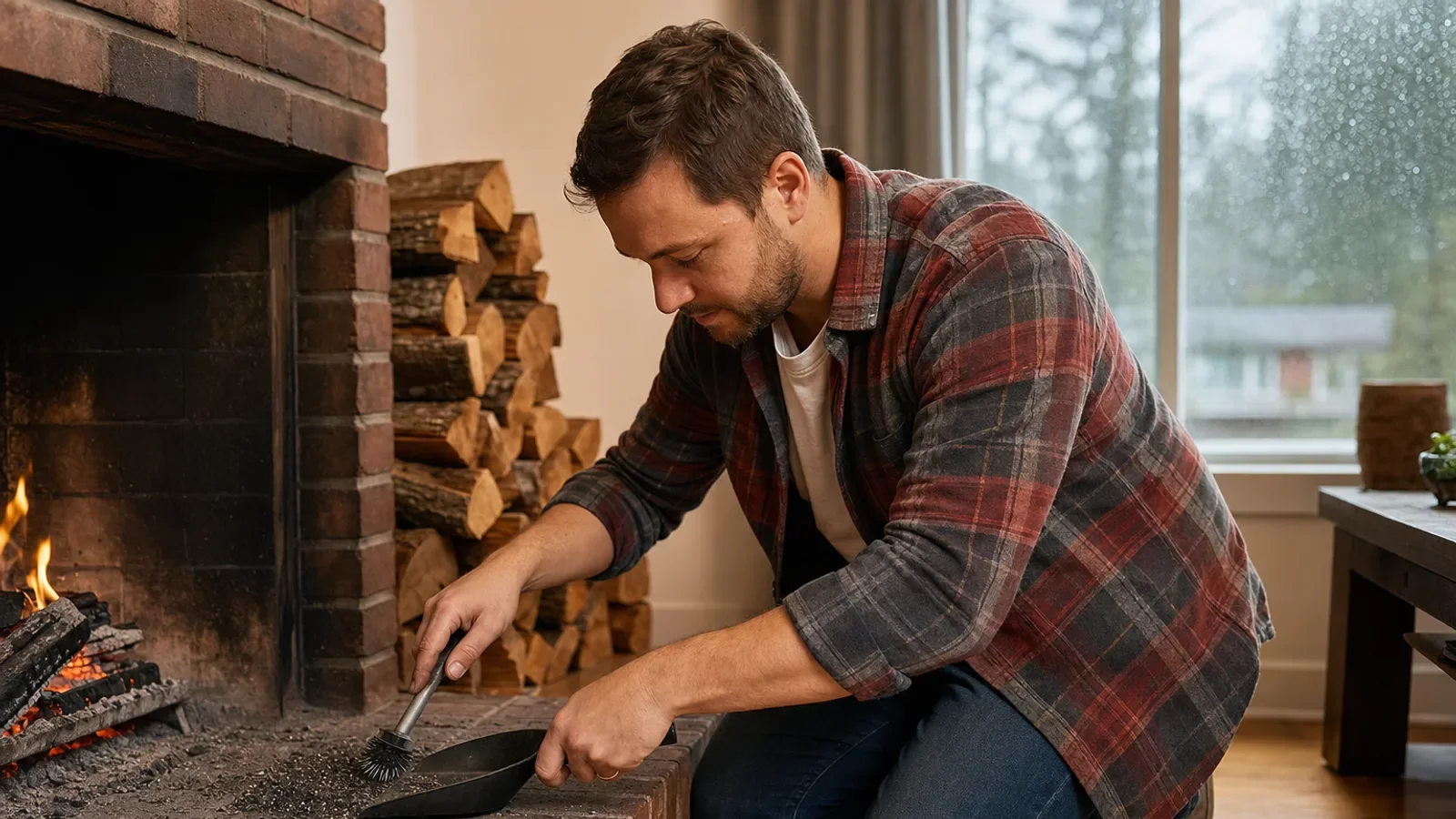
Before the technician arrives, clear the area in front of your fireplace. Move furniture, rugs, and decorative items back at least three feet. If you have a wood-burning insert or a gas log set, let the technician know in advance so they can bring the right brushes and adapters. Ensure the fireplace has been cold for at least 24 hours; sweeping a warm firebox is uncomfortable and can disturb ash in ways that spread fine particles.
If you want it handled correctly the first time, consider professional chimney cleaning in Seattle.
2. Drop Cloths and Containment Setup
The first thing a professional does upon arrival is protect your home. Heavy canvas or plastic drop cloths go down in front of the hearth, and a high-filtration vacuum (rated to capture fine particulates) is positioned to run continuously during brushing. This negative-pressure setup draws debris down into the collection system rather than letting it billow into the room. A well-run cleaning should leave your living space cleaner than it started.
3. Visual Inspection Before Brushing
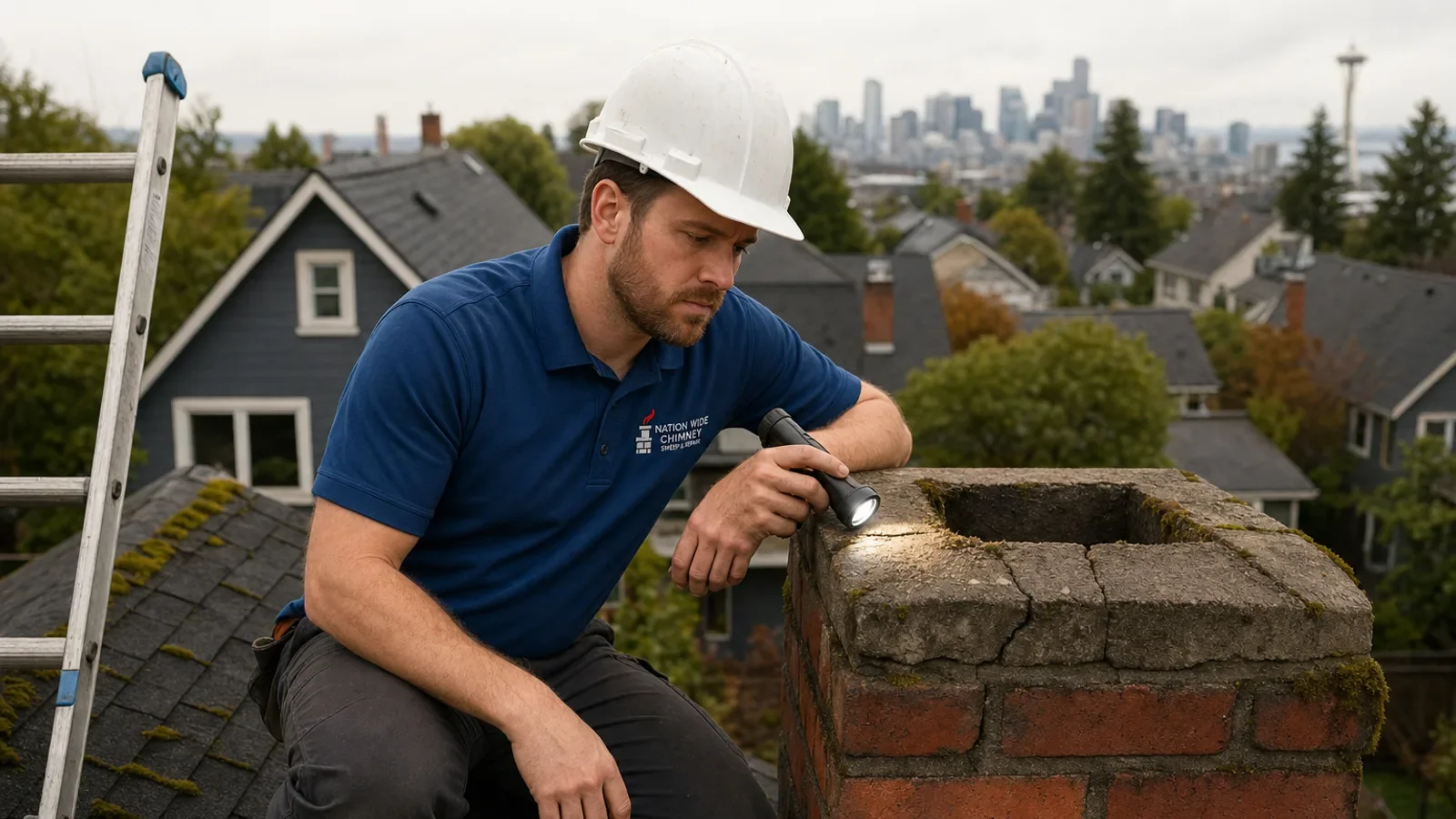
Before any brushes go into the flue, the technician performs a preliminary inspection from the firebox opening, often using a flashlight and an angled mirror to assess visible flue tile condition, damper operation, and the degree of creosote buildup. This step determines which brush size and technique will be used and flags any structural concerns that should be documented before debris is disturbed.
4. Chimney Brushing: Top-Down or Bottom-Up
The actual sweeping is typically done from the rooftop downward using steel or polypropylene brushes attached to flexible rods. The brush diameter is matched to the flue size to ensure full contact with the liner walls. Each rod section is added as the brush works deeper into the flue, dislodging creosote, soot, and debris. In some situations, particularly for taller chimneys or when roof access is limited, a bottom-up approach is used instead, with the vacuum maintaining suction at the firebox opening throughout.
5. Firebox and Smoke Chamber Cleaning
The smoke chamber, the funnel-shaped area just above the damper, is one of the most neglected surfaces in a chimney system. It collects a disproportionate amount of creosote because combustion gases slow and cool as they expand into this space. A thorough fireplace cleaning includes brushing the smoke chamber walls and vacuuming the smoke shelf, a horizontal ledge behind the damper that catches falling debris and rainwater.
6. Post-Cleaning Level I Inspection
After debris is cleared, the technician performs a Level I inspection per the standards established by the National Fire Protection Association (NFPA 211). This covers all accessible portions of the chimney interior and exterior: flue liner condition, mortar joints, damper operation, firebox integrity, and the visible crown and cap. Findings are documented, and any recommended repairs are explained clearly before the technician leaves.
If the inspection reveals damage, understanding what drives chimney repair costs in Seattle can help you evaluate your options before committing to work.
7. Camera Inspection (When Recommended)
For chimneys that have not been serviced in several years, for homes that have recently experienced a chimney fire, or for older Seattle properties with terra-cotta liners, a video camera inspection is often recommended as a separate step. A flexible camera is lowered through the full length of the flue, capturing footage of every liner joint and tile face. This is the only way to reliably detect cracks, offsets, or deteriorated mortar that cannot be seen from the firebox opening or the rooftop.
How Long Does a Chimney Sweep Take in Seattle?
A standard single-fireplace cleaning and Level I inspection typically takes between 45 minutes and 90 minutes. Several factors can extend that window:
- Heavy creosote buildup: Third-degree (glazed) creosote requires chemical treatment before mechanical removal and adds significant time.
- Multiple flues: Homes with two or more flues, common in older Seattle bungalows, require separate setups for each opening.
- Camera inspection: Adding a video scan typically adds 30 to 45 minutes.
- Roof pitch and access: Seattle’s craftsman and Tudor-style homes often have steep roofs that require additional safety rigging for the technician.
- Gas fireplace service: Cleaning and inspecting a gas insert or gas log set involves additional steps around the burner assembly and venting components.
Chimney Sweep vs. Chimney Inspection: Understanding the Difference
Many Seattle homeowners rely on expert chimney cleaning in Seattle for exactly this.
| Service | What It Covers | When It’s Needed |
|---|---|---|
| Level I Inspection | All accessible areas; included with routine cleaning | Annually, or when the system has been in routine use |
| Level II Inspection | All of Level I plus attic, crawlspace, and video scan of flue | When buying or selling a home, after a chimney fire, or after a significant weather event |
| Level III Inspection | All of Level II plus demolition of components to access concealed areas | When a serious hazard is suspected and cannot be confirmed otherwise |
| Chimney Cleaning Only | Mechanical removal of creosote and debris | As a standalone service when a recent inspection already confirmed liner integrity |
| Camera Inspection | Full-length video scan of the flue liner | Older homes, post-fire assessment, suspected liner cracks |
Most Seattle homeowners schedule a cleaning and Level I inspection together as a single annual appointment. If you are purchasing a home in Seattle and the listing does not include a recent chimney inspection report, a Level II inspection is worth requesting before closing.
What Happens If the Technician Finds a Problem?
Finding an issue during a chimney inspection is not unusual, particularly in Seattle’s older housing stock. Common findings include cracked flue tiles, deteriorated mortar joints, a damaged or missing chimney cap, a stuck or corroded damper, and water infiltration around the crown or flashing. When a technician identifies a problem, they should explain what was found, show you documentation or camera footage, and outline the repair options before any additional work begins.
Minor repairs, such as replacing a chimney cap or reseating a damper, can often be completed the same day. Structural repairs to the liner, crown, or masonry typically require a separate appointment. The technician will advise whether the fireplace can be used safely in the interim or whether it should remain out of service until repairs are complete.
For guidance on selecting the right contractor for follow-up work, this resource on choosing a Seattle chimney sweep covers what credentials and process to look for.
Ready to schedule your service? book a professional chimney sweep with Nation Wide Chimney Sweep and Repair and get your Seattle fireplace ready for the season.
Keeping Your Fireplace in Good Shape Between Annual Visits
A professional cleaning resets the clock, but what happens between visits matters too. A few straightforward habits help Seattle homeowners get the most out of each service appointment.
Burn only seasoned hardwood with a moisture content below 20 percent. Wet wood produces far more creosote per fire than properly dried wood, and in Seattle’s damp climate, sourcing well-seasoned firewood takes planning. Keep fires burning at a moderate-to-high temperature rather than smoldering; low, oxygen-starved fires are the primary driver of rapid creosote accumulation. Check the damper before every fire to confirm it is fully open, and inspect the firebox opening periodically for signs of spalling, cracking, or discoloration that might indicate a problem developing between professional visits.
Ready for the next step? Learn how chimney cleaning services in Seattle can help and reach out to the team.
For a full seasonal maintenance checklist, post-cleaning fireplace maintenance tips for Seattle homeowners covers what to do after your sweep appointment to extend the life of your system.
Frequently Asked Questions
How often should a Seattle home’s chimney be swept?
The NFPA recommends annual inspections for all chimneys, fireplaces, and venting systems. For Seattle homeowners who burn wood regularly through the fall and winter heating season, an annual cleaning paired with that inspection is the standard recommendation. Homes that use their fireplace only occasionally may be able to extend the interval, but an inspection should still happen every year to catch moisture damage early.
Will the chimney sweep make a mess in my home?
A properly equipped technician uses drop cloths and a high-filtration vacuum running continuously during the cleaning process. This containment setup captures fine soot and debris before it can settle on furniture or flooring. Some fine dust is possible in older fireplaces with loose mortar, but a professional crew should leave the work area as clean as they found it.
Can I use my fireplace immediately after a chimney sweep?
Yes, in most cases. Once the cleaning is complete and the technician has confirmed that the firebox, damper, and flue are in serviceable condition, the fireplace is ready to use. If repairs are identified during the inspection, the technician will let you know whether it is safe to light a fire before those repairs are completed.
What is creosote, and why does it matter for Seattle fireplaces?
Creosote is a byproduct of wood combustion that deposits on flue walls as smoke cools. It ranges from a light, flaky soot (first-degree) to a hard, tar-like glaze (third-degree). All forms are combustible, and third-degree creosote is particularly hazardous because it burns at extremely high temperatures if ignited. Seattle’s cool, damp winters and the prevalence of wet firewood in the region make creosote accumulation faster here than in drier climates.
Do gas fireplaces need to be swept?
Gas fireplaces do not produce creosote, so they do not require the same mechanical brushing as wood-burning systems. However, they do need annual inspection and cleaning of the burner assembly, pilot components, venting system, and glass panels. Carbon and debris can accumulate in gas vents over time, and the inspection checks for any signs of venting blockage or deterioration.
What credentials should I look for when hiring a chimney sweep in Seattle?
Look for technicians certified by the Chimney Safety Institute of America (CSIA), which requires passing a written examination and ongoing continuing education. Verify that the company carries liability insurance and, for any work on your roof or structural components, confirm they hold an active Washington State contractor license. Requirements vary, so confirming these credentials before booking protects you as a homeowner.
Schedule Your Seattle Chimney Sweep Before the Rains Arrive
Seattle’s heating season arrives quickly, and chimneys that sat idle through spring and summer need attention before the first fire of fall. A professional cleaning removes the creosote and debris that accumulated during the off-season, and the accompanying inspection gives you a clear picture of your system’s condition before you rely on it for warmth. Nation Wide Chimney Sweep and Repair serves Seattle homeowners with thorough, documented service visits that cover everything described in this guide. Contact us today to schedule your appointment and head into the rainy season with confidence.
Not sure what the inspection might turn up? schedule your chimney inspection and cleaning with our Seattle team, or explore what repair costs look like in Seattle if you have an older chimney that may need follow-up work.