Living With Fireplaces in Seattle’s Marine Climate
Seattle homeowners know that a fireplace or wood stove is more than a cozy focal point; it is a practical tool for taking the edge off damp, chilly evenings and gray winter mornings. Between long stretches of rain, marine air moving in from the Sound, and frequent temperature swings, our chimneys work hard. Over time, they quietly collect the residues of many cold nights—soot, creosote, and moisture-laden debris that can compromise both safety and comfort. Understanding why routine attention matters, and how small steps now prevent larger problems later, is the first step to enjoying worry-free fires throughout the seasons.
When neighbors ask me what one change makes the biggest difference in fireplace performance, I point them to consistent, professional chimney cleaning. It sounds simple, yet it is the foundation of a safe, efficient system. In Seattle, our unique weather amplifies the benefits: cleaning not only removes highly flammable creosote but also addresses the relentless moisture that can speed corrosion, deteriorate mortar, and create stubborn odors. Regular attention transforms the fireplace from a potential liability into a reliable, low-stress asset for your home and family.
Safety First: Reducing Fire Risk
The most widely discussed benefit of cleaning is straightforward—less creosote means lower fire risk. Creosote forms when wood gases cool and condense inside a comparatively cooler flue. In Seattle, the air is often humid and the fuel sometimes less than perfectly seasoned, which accelerates buildup. That glaze-like, tarry layer is highly combustible and, if left unchecked, can ignite under the right draft and temperature conditions. Routine service breaks the chain of risk by removing this fuel source and restoring clear, smooth pathways for exhaust. It also ensures that if you do lose draft for a moment or burn a subpar batch of wood, there is no thick residue waiting to flash.
Cleaning also improves the visibility of hidden hazards. When a professional brushes and vacuums the system, they expose cracks, gaps, or missing mortar that might otherwise remain concealed behind soot. Those tiny failures are not cosmetic. They can allow heat and sparks to breach the flue liner, migrate into adjacent walls or framing, and cause slow, smoldering damage. In a dense neighborhood, or in older homes that have seen multiple retrofits, proactively managing that risk matters tremendously.
Better Draft and Heating Efficiency
A clean flue breathes. That simple truth translates into real comfort on damp Pacific Northwest nights. Draft depends on a stable temperature difference between the firebox and the outside air, as well as a smooth passage that encourages steady upward flow. Soot, spiderwebs of creosote, and damp debris narrow that passage and roughen the interior. The result is sluggish draft, smoky starts, and underperforming fires that never quite come alive. After a thorough cleaning, you typically notice quicker light-offs, a brighter flame, and less smoke curling back into the room, all of which point to a more efficient, enjoyable burn.
In gas fireplaces and inserts common across Seattle condos and townhomes, cleanliness is just as important. While they do not create creosote the way wood does, they can accumulate dust, pet hair, and combustion byproducts that disrupt sensors and affect flame quality. Ensuring clear exhaust pathways minimizes nuisance shutdowns and keeps the appliance operating as designed. Good draft conserves energy by making every log—whether wood or gas—work a little harder for you.
Indoor Air Quality and Peace of Mind
On still, rainy evenings, poor draft and buildup can lead to occasional backpuffing, when smoke and combustion byproducts swirl into the living area. While a single smoky event is bothersome, repeated incidents can leave residues on furnishings and create breathing discomfort for sensitive family members. Cleaning reduces these events, and the inspection that accompanies it often reveals loose dampers, misaligned doors, or gaskets that leak. Fixing those details matters for indoor air quality, an often-overlooked benefit that becomes clear the first time you notice less haze on the windowpanes after a stretch of fires.
Odors follow a similar pattern. In our coastal climate, damp soot can produce a sour, acrid smell, especially after a wind-driven rain. A freshly cleaned chimney, paired with a properly seated cap and intact crown, helps keep that mustiness at bay. When the hearth area smells neutral, the whole room feels fresher, and you can confidently entertain without worrying that the first thing guests will notice is a lingering fireplace odor.
Protecting Masonry From Seattle’s Rain
Seattle’s weather is beautiful, but it is not kind to unprotected masonry. Chimneys stand above the roofline, exposed to rain, wind, and cycles of wet and dry that slowly break down mortar joints and brick faces. During cleaning, we can see the masonry clearly and check for early signs of trouble—hairline cracks in the crown, whitening or flaking on brick faces, and deteriorating joints that invite water into the structure. Water intrusion is the enemy of longevity; once moisture gets in, freeze-thaw cycles, even mild ones, can exploit tiny weaknesses and accelerate deterioration.
Regular maintenance creates a rhythm of prevention. Instead of waiting for a leak stain to appear on the ceiling, you get an early heads-up that the crown needs sealant or that the flashing around the base of the chimney should be reworked. Many Seattle homes, especially in older neighborhoods with Craftsman bungalows and mid-century builds, have chimneys that predate current best practices. Proactive cleaning and inspection bridge that gap, extending the life of components that would otherwise slowly succumb to the elements.
Resale Confidence and Neighborhood Fit
Buyers in our market love a fireplace, but they also worry about unknowns. A record of routine service telegraphs care and makes inspection day smoother. When a prospective buyer or their home inspector sees a clean, well-maintained chimney with documented evaluations, it removes a cloud of uncertainty. This is especially true in neighborhoods with vintage homes—Ballard, Queen Anne, Capitol Hill, and West Seattle—where character is prized but hidden maintenance concerns can derail an offer. Cleanliness becomes part of the narrative: this is a home you can warm up to without inheriting an immediate to-do list.
There is a community angle too. In a city where air quality and neighborhood livability matter, a properly maintained system emits less smoke and fewer particles. That civility is felt on calm nights when smoke can settle in low pockets, or when temperature inversions hang over the city. Being a good neighbor sometimes starts with a responsible, well-tuned hearth.
Midseason Reliability and Fewer Surprises
The middle of burning season is when homeowners feel the difference between “it works” and “it works well.” In January, when a Pineapple Express drenches the city and gusty winds roil the draft, having a clean, unobstructed flue prevents small annoyances from piling up into disruptions. The ability to light a fire confidently without babysitting smoke alarms or fiddling endlessly with kindling is worth a lot in day-to-day comfort. This is also when people discover the quieter payoff of consistent chimney cleaning: a system that simply behaves itself, even as weather and wood quality vary.
In multi-story homes and townhouses, reliable draft keeps smoke from sneaking into upper rooms through small framing chases or unused flue passages. With air pressure shifts common in coastal storms, a clean flue reduces eddies and pressure pockets that otherwise encourage smoke to take unintended paths. The physics is simple: fewer obstructions mean air follows the route you want it to follow.
Seattle-Specific Issues: Caps, Crowns, and Critters
Given our combination of rain and thriving urban wildlife, chimney caps and crowns carry more weight here than in drier regions. A good cap sheds rain, blocks wind-driven embers from escaping, and discourages birds and raccoons from making themselves at home. During cleaning, it is easy to evaluate how well the cap is performing. Are the screens intact? Is there corrosion starting at fasteners? Does the crown, that concrete or mortar platform beneath the cap, shed water properly without ponding? These details influence how often you will need to address odors, leaks, or animal intrusions later.
Seattle’s coastal winds also test the resilience of flue liners and top-sealing dampers. Cleaning is the perfect time to verify that these components still seat and seal correctly. For homes close to the water in Magnolia, Alki, or Leschi, salt air and gusty conditions compound wear. Early detection costs nothing compared to the disruption a midwinter leak or downdraft can cause.
Fuel and Burning Habits Matter
Even the best fireplace cannot overcome consistently wet fuel. Part of the benefit of a cleaning visit is the conversation it sparks about burning practices. Many homeowners discover that small changes—stacking wood to dry with better airflow, mixing dense hardwoods with softer local species, or letting a fire establish fully before turning down the damper—dramatically reduce residue. When creosote production slows, intervals between cleanings stretch to a comfortable, predictable cadence that fits the way you actually use the hearth.
For gas units, we focus on clean burners, stable flame patterns, and unobstructed vents. Although creosote is not in play, dust and spider webs can mislead safety sensors. Cleaning restores correct operation and helps maintain the quiet confidence that comes with a system ready for a last-minute cozy evening, without the flicker of an error light.
Insurance, Codes, and Peaceful Documentation
While most homeowners never experience a serious fireplace incident, the documentation from routine service can be invaluable. Insurers and real estate transactions alike appreciate records that show a system has been evaluated by a qualified professional. In Seattle’s competitive market, such paperwork often streamlines negotiations and reduces the chance that a buyer will request extensive concessions for a chimney they perceive as mysterious. A clean, well-documented fireplace becomes an asset rather than a bargaining chip.
Local and national best practices, including standards commonly referenced by inspectors, all point to the same principle: soot and creosote are best managed through regular removal and early repair of small defects. Integrating that principle into your annual or semiannual home care rhythm sets you up for predictable, low-stress ownership.
The Emotional Benefits: Comfort Without Worry
The gentle crackle of a fire on a rain-swept evening is one of Seattle’s great pleasures. When you know the system behind that glow is clean and sound, you can relax into the experience instead of thinking about what might be happening out of sight. That confidence shows up in small ways—starting a fire on a whim, hosting friends without hesitation, or settling into a weekend morning ritual with a book and a mug.
It is easy to overlook such intangible benefits until something interrupts them: a smoky first light, a persistent odor after a storm, or the dismaying discovery of fine black dust on the mantle. Routine cleaning protects the moments that make home feel like home.
Timing: Finding the Right Rhythm for Seattle Homes
Seattle’s seasons lend themselves to a simple schedule. Many homeowners choose an early fall cleaning to prepare for the first cold snap, while others prefer spring, once the last fire is out and before summer travel. Spring has the advantage of catching any moisture-driven staining or leaks while memories are fresh, and it positions you to address small masonry repairs during the dry months. Fall, on the other hand, gives extra peace of mind heading into the holidays. Either way, the consistent rhythm yields the same benefits.
For heavily used wood stoves in neighborhoods that rely on supplemental heat—parts of West Seattle, Beacon Hill, and Lake City among them—midseason check-ins can be wise. You will know within a couple of months whether your burn habits and wood supply are creating faster-than-usual buildup. Adjusting course early keeps the rest of the season pleasant.
What We See During a Cleaning
People are often curious about what a professional actually observes. Beyond the obvious soot and ash, we look at the masonry’s color and texture, which tell stories about moisture movement. Light gray, fluffy deposits suggest one pattern of use, while shiny, dark glaze points to lower burn temperatures or wetter wood. Hairline mortar cracks can indicate settling or thermal stress. We also check the smoke chamber transitions where turbulence can collect residue, the damper’s integrity, and the condition of the firebox lining. On roofs, we evaluate the crown, cap, and flashing, all of which must work together to shed water in our climate.
These observations become a roadmap for recommendations. Sometimes it is as simple as adjusting how you start the fire or choosing a different wood mix. Other times, sealing the crown or refreshing mortar joins the to-do list. The point is not to create projects, but to prevent surprises.
Preparing Your Home for a Visit
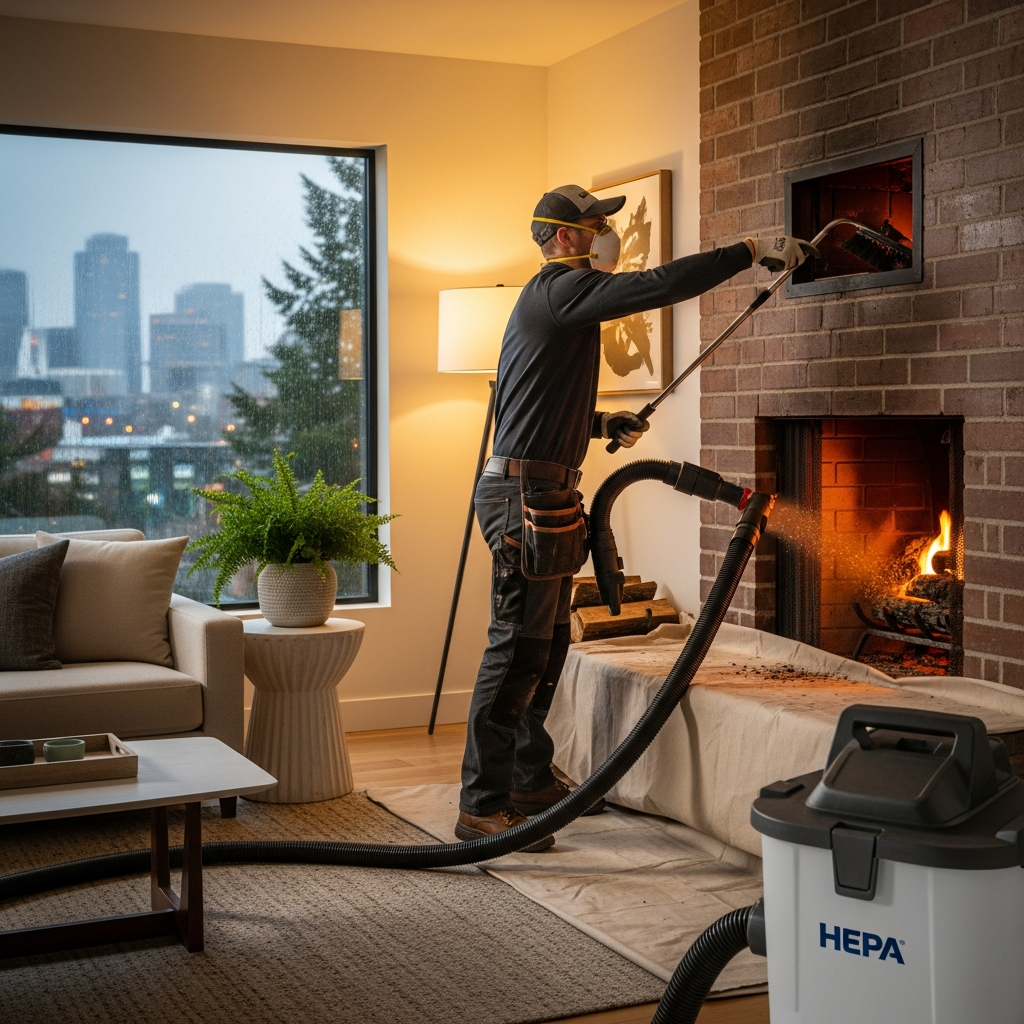
One underrated benefit of regular appointments is how easy they become. Clear a small space around the hearth, ensure pets are comfortable in another room, and let the firebox cool completely. With the right equipment—clean drop cloths, soot containment systems, and HEPA filtration—cleaning is neat and minimally disruptive. When the soot and creosote are gone and airflow is restored, your home feels immediately calmer and more comfortable.
Afterward, you will likely notice that the next fire lights with less fuss and the glass, if your unit has it, stays clearer longer. Draft stabilizes, and that lingering edge of odor disappears. In a city where we prize both comfort and sustainability, it is a small ritual with oversized benefits.
Frequently Asked Questions
How often should a Seattle homeowner schedule chimney service?
Usage patterns and fuel quality vary, but many Seattle households benefit from annual attention if they burn regularly through fall and winter. Light users might stretch the interval, while daily wood stove operation can justify midseason check-ins. Because our humidity and rain encourage odor and moisture issues even in off months, consistent oversight is helpful.
Does gas fireplace maintenance matter as much as for wood?
Yes, though the focus shifts. Gas units avoid creosote but still accumulate dust and residues that affect sensors and airflow. Cleaning keeps flames stable, glass clearer, and safety systems operating as intended. It also verifies that venting components have not shifted or corroded in our marine environment.
What are the telltale signs that cleaning is due?
Slow, smoky starts; strong odors after rain; visible soot flakes on the hearth; and persistent haze on glass doors commonly signal that maintenance is overdue. If you need to crack a window to improve draft, or if smoke alarms chirp when you light up, it is a good time to schedule an evaluation.
Will cleaning be messy?
With modern containment and HEPA filtration, the process is tidy. Technicians seal the area, protect flooring and furnishings, and remove residues directly into contained systems. When preparation is handled well and the firebox is cool, the whole visit is straightforward and low impact.
Why does Seattle’s weather make such a difference?
Moisture multiplies nuisance factors. Damp soot smells worse, masonry weathers faster, and windy storms test every joint and seam. Regular service counterbalances those forces by removing residues, confirming that water-shedding features work, and catching small vulnerabilities early.
Can I do it myself?
Homeowners can certainly keep the area clean and watch for obvious issues, but professional equipment and trained eyes make a difference, especially in identifying creosote types, drafting quirks, and water entry points. A blend of your own attentiveness and periodic professional care yields the best results.
Is fall or spring better?
Either works. Fall sets you up for the season; spring captures fresh observations and positions you to make small masonry improvements during dry months. The key is consistency more than the specific month on the calendar.
Ready for a Warmer, Safer Seattle Home?
If you have been putting it off, this is the perfect time to make your fireplace a source of comfort rather than concern. Schedule professional chimney cleaning, enjoy cleaner air and easier fires, and settle in for the next rainy evening with complete confidence that your system is ready to perform.