On crisp Seattle evenings, a well-tuned chimney flue is the quiet partner that makes heat feel comfortable and safe. It draws smoke and exhaust up and out, protects the surrounding masonry, and helps appliances—from open fireplaces to wood stoves and gas inserts—perform as designed. When the flue is compromised by cracks, gaps, mis-sizing, or obstructions, the risks multiply: poor draft, excess condensation, creosote accumulation, and the potential for exhaust to spill into living spaces. In our damp climate, where moisture is persistent and temperature swings are moderate, flue issues can develop subtly and then show up all at once during the first big burn of the season. Understanding flue repair from a Seattle perspective ensures that your system handles real-world weather and delivers comfort reliably. If you are exploring options or scheduling chimney repair with a focus on flues, this guide will help you know what to expect and why certain choices matter.
What the flue does and why sizing matters
The flue is the interior pathway that carries exhaust from the firebox or appliance to the outdoors. Its size and shape must match the appliance it serves. Too large, and gases slow down, cool, and condense inside, leading to creosote in wood systems and acidic condensate in gas systems. Too small, and draft suffers, smoke rolls back, and the fireplace feels frustrating. Many Seattle homes have undergone appliance changes over the years—wood-burning fireplaces converted to inserts, or oil appliances switched to gas—without adjusting the flue accordingly. Flue repair often starts with matching the liner to the actual appliance so temperatures and draft stay in the sweet spot for safe, clean operation.
Common flue issues in Seattle homes
Clay tile liners, common in older chimneys, can crack at joints or spall at the surface after years of soaking and drying in our wet climate. Mortar joints can erode, leaving gaps where heat and gases escape into the masonry. Metal liners can corrode if condensate lingers, particularly with modern, efficient gas appliances that produce cooler exhaust. Offsets in tall chimneys and nests from animals or birds can also obstruct flow. Each of these conditions interferes with the flue’s job and signals a need for targeted repair or relining.
Inspection: seeing what the eye cannot
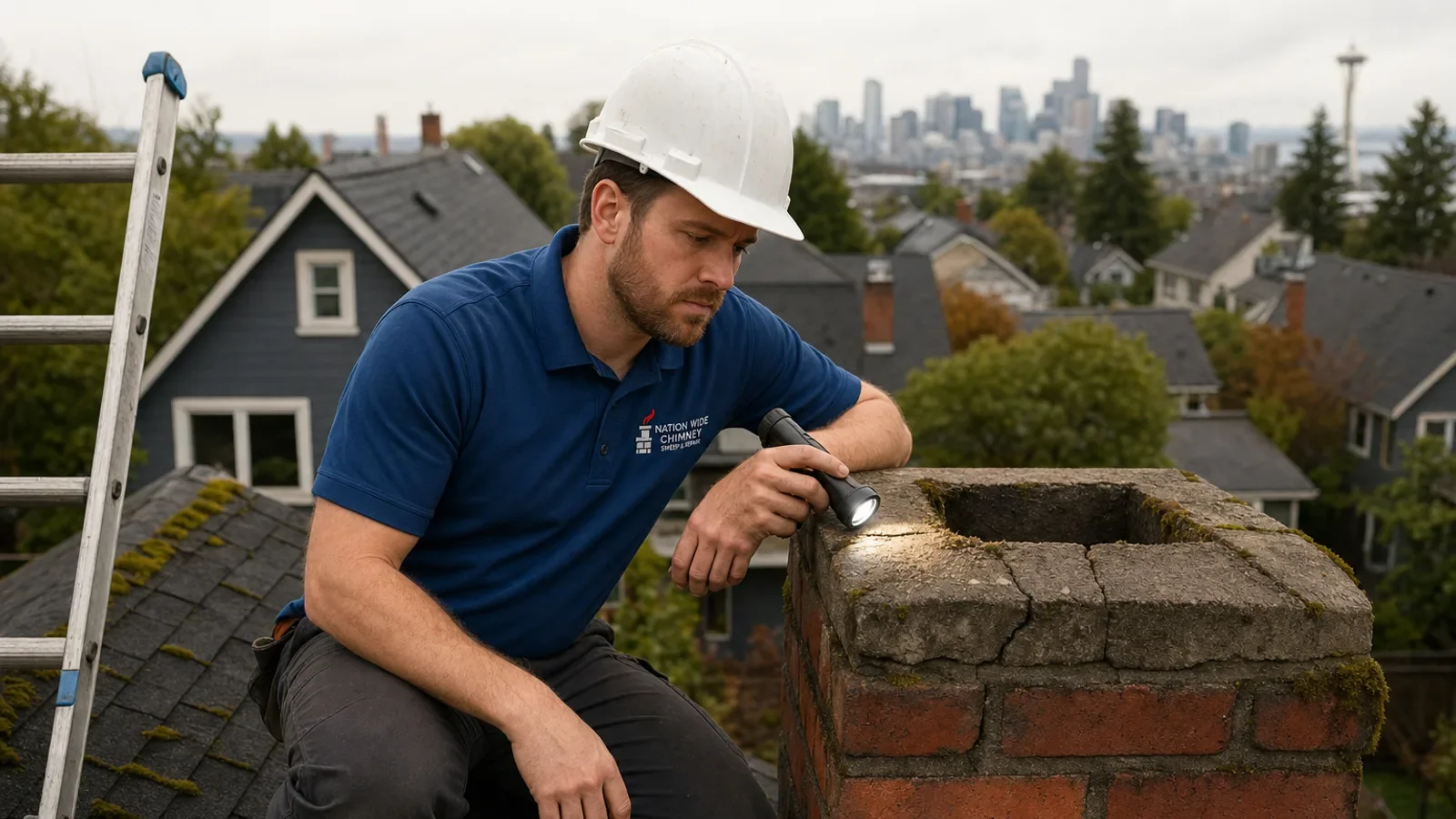
A thorough flue assessment uses specialized cameras to look along the entire length of the liner. Photographs of cracks, missing mortar, glaze buildup, and obstructions help separate minor wear from hazards that demand action. On the roof, we confirm that the termination height and cap design support good draft and shed rain. At the appliance connection, we check for clean transitions and secure joints. The result is a clear map of what is happening inside the chimney, not just assumptions based on smoke in the room or staining on the exterior brick.
Repair and relining options
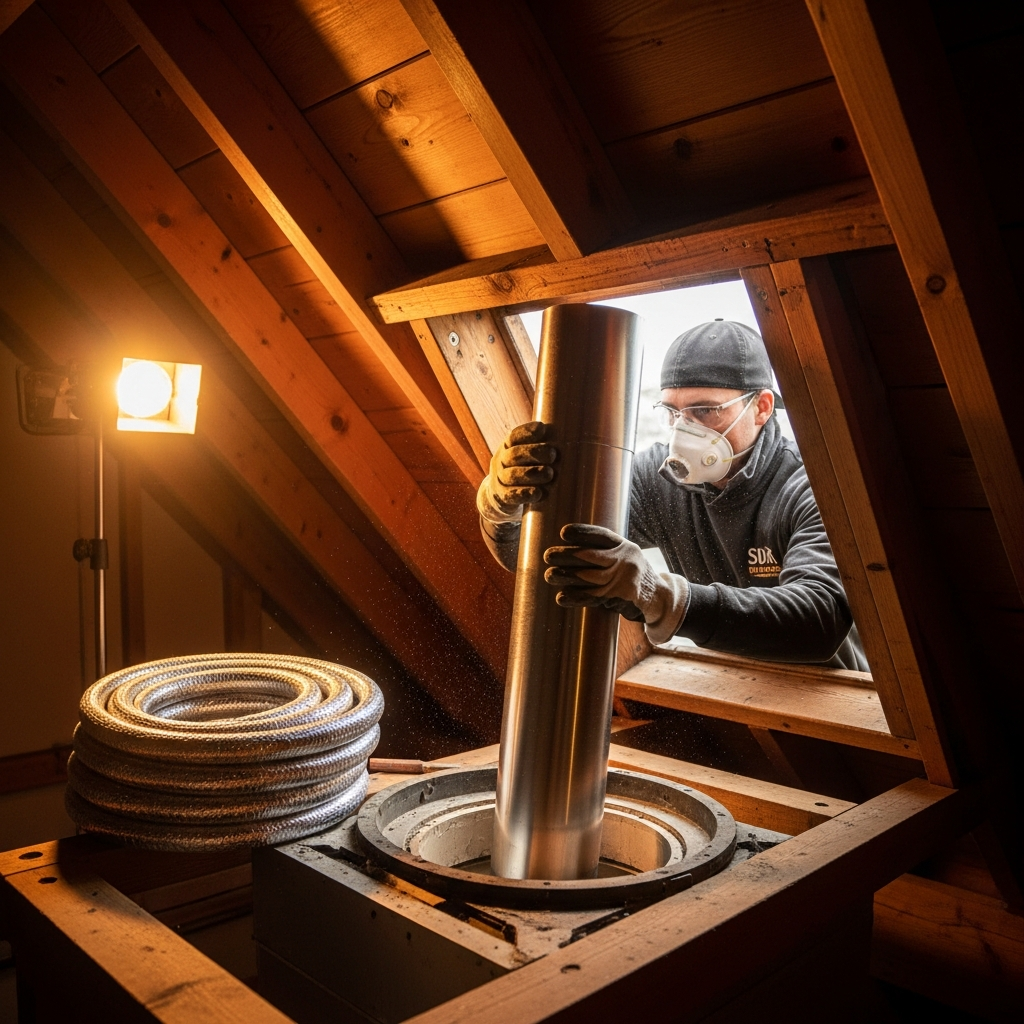
When clay tiles are cracked or joints are failing, one solution is to install a new stainless steel liner sized to the appliance. Stainless liners are durable, smooth, and resistant to corrosion when matched with the right alloy for the fuel type. For certain situations, cast-in-place systems that create a continuous, insulated flue can stabilize older chimneys and improve draft by smoothing interior surfaces. If damage is limited to a small area, localized repairs may be possible, but in a moist climate like ours, a continuous, well-sized liner is often the most reliable fix for the long term.
Draft, condensation, and the Seattle factor
Because our air is cool and damp much of the year, flues can be slow to warm up. A cold, oversized flue allows exhaust to cool quickly, encouraging condensation that leads to creosote or acidic moisture. Correct sizing and, when appropriate, insulation around a liner help the column of air heat rapidly and maintain upward flow. A properly capped and crowned chimney also keeps rain from entering and chilling the flue. Together, these details reduce smoking on startup, limit moisture-laden byproducts, and improve overall safety.
Integrating flue repair with caps, crowns, and flashing
No flue repair should happen in isolation. If a cap is missing or undersized, wind-driven rain will add water to a freshly repaired liner. A cracked crown can admit moisture that migrates into joints. And flashing at the roofline must keep the base of the chimney dry, or you will be fighting dampness from below. The Seattle approach treats the chimney as a system: fix the flue, then ensure the top sheds water and the base is sealed to the roof properly. This end-to-end thinking gives your repair the best chance to perform for years without surprises.
Appliance compatibility: wood, gas, and beyond
Each fuel type brings its own considerations. Wood systems need liners that tolerate higher temperatures and resist creosote accumulation. Gas appliances, especially high-efficiency models, create cooler exhaust and more condensate; the liner material and size must handle that chemistry and encourage upward flow. If you have converted appliances over time—say, a gas insert in a masonry fireplace—the new liner should match the insert’s specifications, not the original open-hearth dimensions. Compatibility is the difference between a system that behaves and one that constantly tests your patience.
Safety benefits you can feel and measure
When a flue is repaired and sized properly, performance improves immediately. Fires start cleaner, with less smoke in the room. Draft stabilizes, reducing odors and back-puffing. Creosote formation slows because the flue stays warmer and gases move swiftly upward. For gas systems, correct venting reduces corrosion risk and ensures exhaust exits the home as intended. These are comfort upgrades you can feel and safety improvements you can trust.
Scheduling and curing in a wet climate
Some flue repairs—particularly cast-in-place systems and certain mortars—need dry conditions to cure fully. Coordinating schedules with weather is part of doing the job right in Seattle. Crews should plan protections, watch forecasts, and be candid about timing so materials have the environment they need to set and perform. This patience pays off during the long, rainy stretches when rushed work would have struggled.
Historic chimneys and sensitive approaches
Older brick stacks often carry historical significance and a softer masonry profile. Flue work in these chimneys benefits from gentler cleaning techniques, minimal demolition, and liner choices that respect the original structure. Preserving the exterior while upgrading the interior path gives you the best of both worlds: the look you love and the safety you need.
Maintenance after flue repair
Maintenance is straightforward but important. Schedule regular cleanings for wood-burning systems, especially during peak season. Inspect caps and crowns annually, and watch for signs of moisture like staining or odors after storms. Stay familiar with how your appliance behaves; if startup becomes smoky again or you smell exhaust, it is time for a check. A small habit of attention keeps the system performing at its best.
Midway through the decision process, many homeowners want reassurance that their plan covers both the visible and the hidden. This is the moment to consult with seasoned Seattle-based chimney repair specialists who can show video of your flue, explain liner options, and outline how cap and crown details will protect the work. Clear information turns uncertainty into confidence.
What a successful flue repair looks like in practice
After a proper repair, you will notice steadier draft, fewer odors, and cleaner glass on inserts. On the roof, the termination will look tidy and proportioned. Inside, you will not be thinking about the flue, which is exactly the point. It will simply work—quietly moving exhaust out and helping warmth feel easy and safe.
Frequently Asked Questions
How do I know my flue needs repair?
Warning signs include smoke rollout, persistent odors, visible cracks on a camera inspection, or evidence of condensate staining. In older homes with appliance updates, mismatched liner size is also common. A professional inspection with documentation will clarify whether you need relining or targeted repairs.
What are the advantages of a stainless steel liner?
Stainless liners are durable, smooth-walled, and available in sizes that precisely match your appliance for better draft. When insulated, they help keep flue gases warm, reducing condensation in our damp climate. Alloys can be selected to match fuel type, improving resistance to corrosion.
Will a new liner improve draft and reduce smoke?
Yes, when sized correctly. A right-sized, insulated liner heats quickly and maintains upward flow, which reduces smoke rollout at startup and minimizes creosote formation. You will feel the difference in easier lighting, steadier flame, and fewer odors.
Do I need to replace my cap and repair the crown too?
It depends on their condition, but flue repairs are most successful when the entire top-of-chimney assembly sheds water effectively. A sound cap keeps out rain and wildlife, while a healthy crown directs runoff away from the stack. Addressing these together protects your new liner.
Can flue work preserve the historic look of my chimney?
Absolutely. Interior relining while preserving the exterior brick is common in Seattle’s older homes. Skilled crews protect historic masonry, match mortars when any exterior touch-ups are needed, and focus changes where they are least visible.
How often should I schedule inspections after repair?
Plan an annual check, especially before the heating season. For wood systems used heavily, mid-season cleanings may be wise. Quick visual checks after big storms help catch any top-of-chimney issues early, keeping the system dry and stable.
Ready to make your Seattle home warmer and safer?
If you are planning flue repairs or want a second opinion before the rainy season, connect with local experts who combine careful diagnostics with system-wide solutions. Reach out to trusted chimney repair professionals who understand how our climate affects draft, condensation, and longevity, and enjoy the confidence of a flue that performs when you need it most.